









How 3D Line Laser Profilers Solve Critical Challenges in Automotive Tire Manufacturing
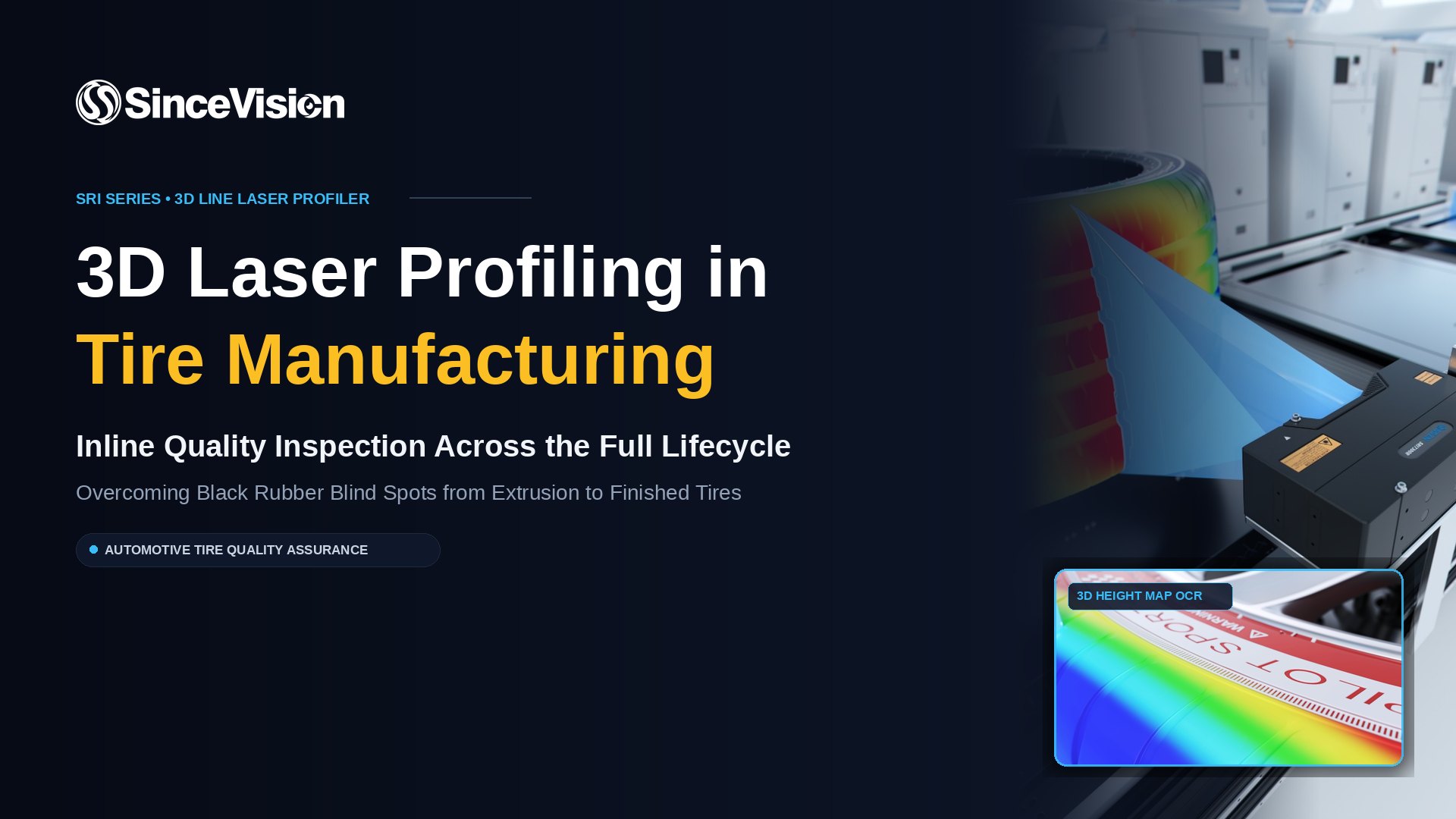
The SinceVision SRI Series 3D line laser profiler provides non-contact dimensional inspection across all tire manufacturing stages, from raw rubber extrusion to finished tire testing. Operating with high-sensitivity 650nm optics at scanning speeds up to 720 mm/s, it captures true 3D surface topography to detect sidewall bulges, verify ply overlaps, and read black-on-black DOT codes without contrast lighting issues.


1. Quick Summary and Manufacturing Snapshot
Every automotive vehicle on the road requires tires that are structurally sound, balanced, and completely free of hidden internal flaws. In modern tire manufacturing, traditional 2D cameras often fail because black rubber absorbs light and offers almost no visual contrast.
The SinceVision SRI Series 3D line laser profiler solves this challenge by projecting a laser line across moving rubber components to measure physical height, width, and surface shape. By capturing true 3D surface topography at high speeds, tire manufacturers detect dimensional errors and assembly defects early in the production cycle, protecting tire integrity and reducing costly material waste.
| Manufacturing Stage | Key Inspection Task | SinceVision SRI Series Capability | Automotive Defect Prevented |
Rubber Extrusion | Tread and sidewall continuous groove geometry | Inline cross-sectional width and thickness tracking | Uneven tread wear and out-of-spec tire balance |
Body Ply Preparation | Cord spacing, sheet width, and splice overlap | High-resolution edge and layer detection | Weak carcass structure and structural air pockets |
Tire-Building Machine | Strip position and winding alignment on drum | Real-time edge tracking during drum rotation | Splice gaps and trapped air in green tires |
Finished Tire Inspection | Sidewall bulges, dents, and surface damage | 720 mm/s high-speed scanning with 650nm red laser | High-speed tire blowouts and vibration |
DOT Code & Markings | Raised embossed lettering and compliance codes | 3D height relief mapping for automated OCR | Tracking errors and non-compliant tire shipments |
Winter Tire Studding | Stud hole XYZ position on tread blocks | Precise 3D coordinate feedback to studding guns | Missed holes, tilted studs, and tread tearing |
2. The Core Problem: Why Traditional 2D Cameras Struggle with Tires
Manufacturing tires for passenger vehicles, commercial trucks, and electric vehicles involves assembling multiple flexible rubber components. Inspecting these materials during production has historically been difficult for automated quality systems.
Tires present three fundamental inspection challenges:
Black-on-Black Low Contrast: Rubber treads, plies, and sidewalls are solid black. Traditional 2D machine vision relies on color differences and lighting contrast to find edges. When a black rubber strip overlaps another black rubber strip, 2D cameras cannot reliably detect the seam.
Depth Blindness: A standard camera takes a flat photograph. It cannot verify whether an extrusion is 0.5 mm too thick or whether a sidewall has a subtle outward bulge caused by a broken internal cord.
Ambient Light Interference: Factory lighting changes throughout the day. Glare from glossy uncured rubber causes 2D image sensors to produce false defect alerts, slowing down production lines.
Advantages of Laser Triangulation
3D line laser profilers do not rely on surface color or ambient factory lighting. The sensor projects a focused laser line onto the rubber surface. A sensitive internal camera views that line from an angle. As the rubber moves or rotates beneath the sensor, changes in the rubber surface height physically shift the position of the laser line on the camera sensor.
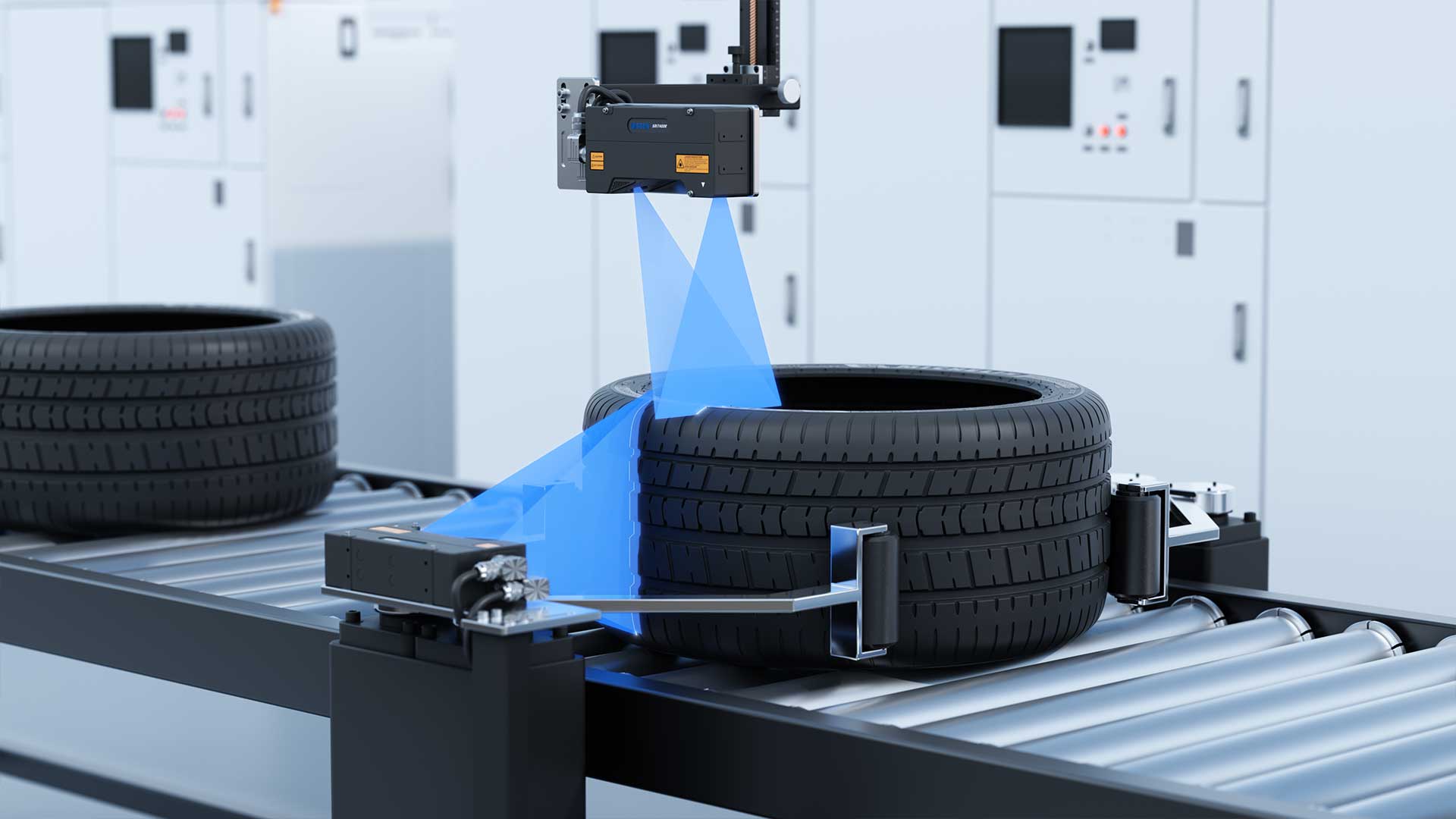
The system instantly calculates exact physical measurements (X-axis width and Z-axis height) in millimeters. This enables automated systems to inspect black rubber parts with consistent micron-level precision.
3. Six Ways 3D Line Laser Profilers Solve Bottlenecks Across the Tire Lifecycle
3.1 Rubber Extrusion Profiling: Catching Shape Errors Early
Before a tire is assembled, raw rubber compound is forced through an extrusion die to form long, continuous strips of tread and sidewall. As the hot rubber leaves the die, it experiences die swell, temperature changes, and stretching on conveyor belts.
Challenge: If the extruded tread profile is too thick or uneven, the cured tire will be unbalanced. If the groove dimensions are incorrect, water drainage channels will fail safety standards.
Solution: SRI Series mounts directly over the moving extrusion line. It continuously scans the full cross-sectional profile of the rubber web, measuring groove depth, total width, edge taper, and centerline thickness.
Value: Extruder operators receive instant feedback if dimensions begin to drift. Adjustments can be made immediately, preventing hundreds of meters of out-of-spec rubber from reaching the cooling line.
3.2 Body Ply Inspection: Ensuring Carcass Strength
Body plies form the structural skeleton of the tire. They consist of parallel fabric or steel cords encased in thin sheets of rubber. These plies are cut to size and spliced together before tire building.
Challenge: When two ply sections are joined, the splice must overlap by an exact width. If the overlap is too narrow, the joint can pull apart under inflation pressure. If the overlap is too wide, it creates a heavy spot that causes vehicle vibration.
Solution: SRI Series sensors scan the moving ply web to verify width, cord straightness, and splice overlap positions.
Value: Tire plants verify structural integrity before components reach the building drum, ensuring that every tire carcass meets OEM load requirements.
3.3 Tire-Building Machine (TBM): Catching Assembly Flaws Before Curing
During the tire-building stage, an automated drum rotates while laying down multiple layers of rubber, plies, steel belts, beads, and tread strips to form a "green" (uncured) tire.
Challenge: Flexible rubber strips can wander, stretch, or curl at the edges as they are wound onto the drum. An air pocket or misaligned seam trapped inside a green tire cannot be corrected once the tire enters the vulcanization mold.
Solution: An SRI Series profiler monitors the drum surface in real time during rotation. The sensor tracks strip edge positions, verifies overlap consistency, and detects surface bubbles or folds.
Value: Green tire defects are flagged immediately on the building drum. Scrapping or adjusting an uncured rubber component is fast and inexpensive, whereas scrapping a vulcanized tire wastes significant energy and raw material.
3.4 Finished Tire Inspection: Eliminating Dangerous Sidewall Bulges and Dents
After tires are cured in a heated mold, they undergo rigorous final quality control. The sidewall is the most critical area to inspect because it directly flexes during vehicle operation.
Challenge: Broken internal cords create an outward bulge on the sidewall, while overly tight internal plies create an inward dent. Bulges can lead to catastrophic tire blowouts at highway speeds. Because cured tires rotate rapidly during final inspection, detecting subtle bulges smaller than 0.3 mm has historically been challenging.
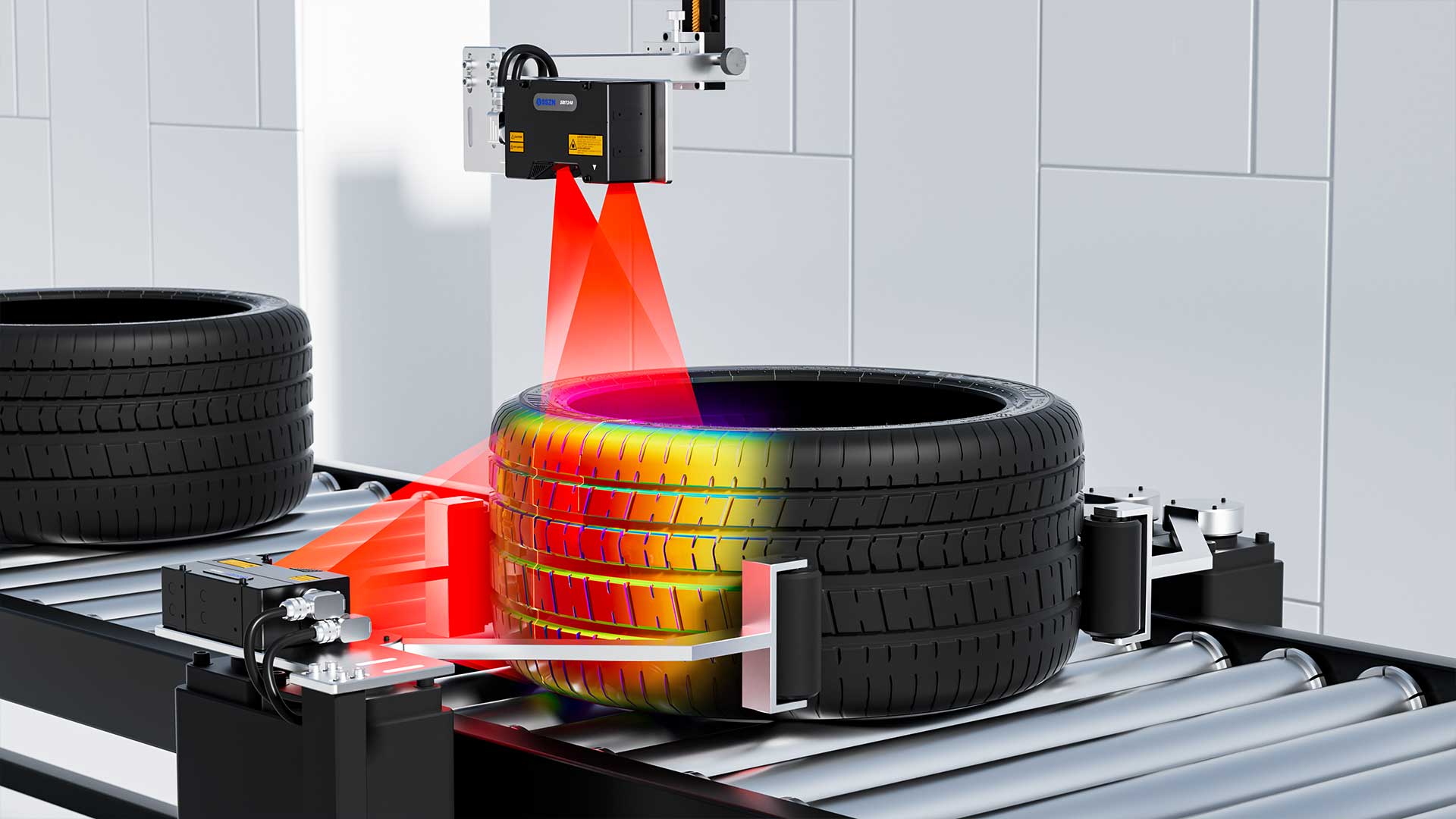
Solution: An integrated multi-sensor SRI Series system inspects the rotating finished tire. Using a high-sensitivity 650nm red laser camera designed specifically for dark rubber, the system captures full 3D topography at a surface speed of 720 mm/s. The system inspects a standard 19-inch passenger car tire in just 0.48 seconds.
Value: Rotary calibration software maps the tire sidewall into a flat, true 3D image, automatically identifying bulges, dents, and surface blemishes for automated sorting.
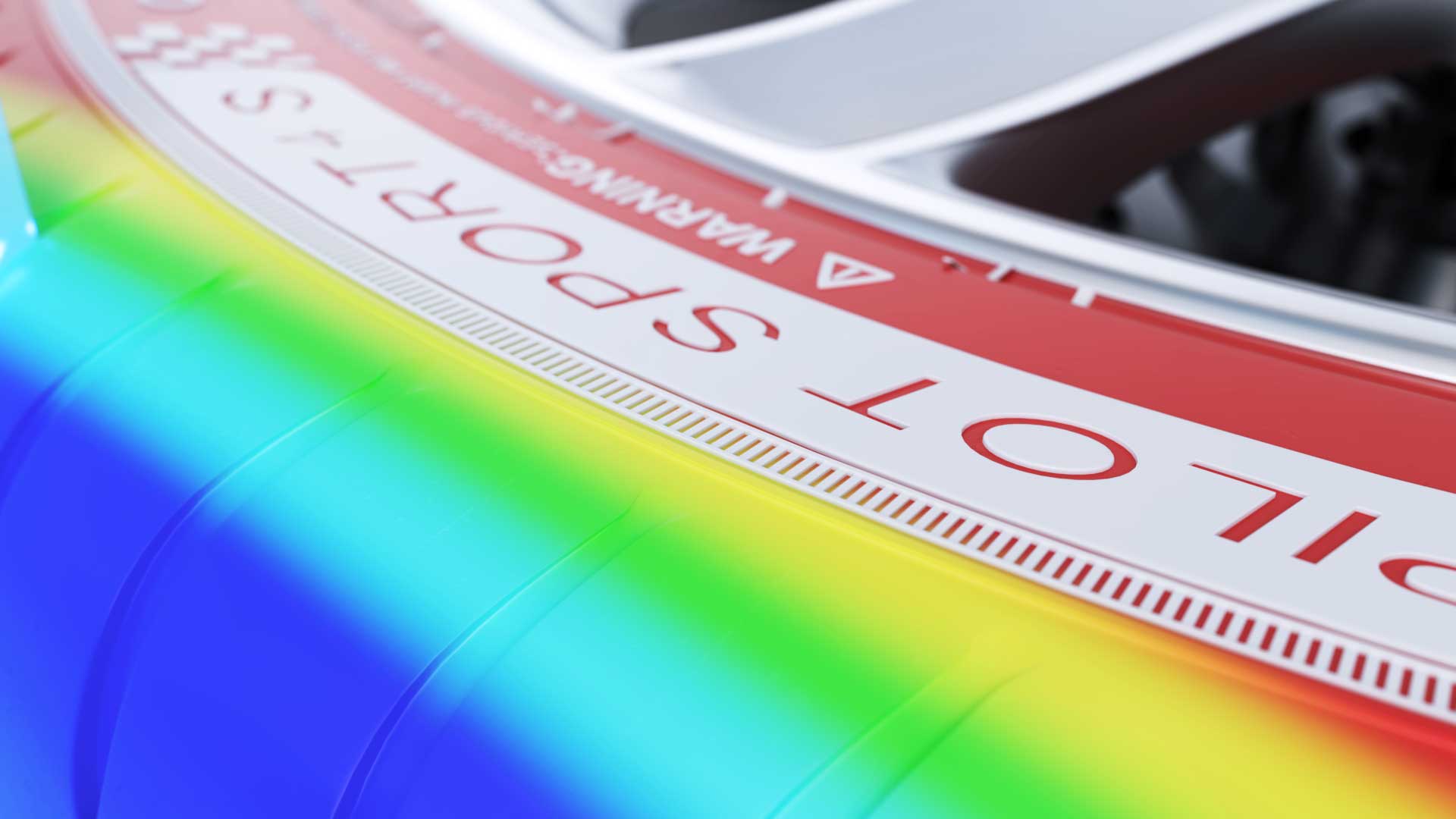
3.5 Tire Markings and DOT Code Identification: Automated Traceability
Regulatory standards require every tire to display raised alphanumeric markings on its sidewall, including the Department of Transportation (DOT) date code, tire size, load index, and brand name.
Challenge: Because the raised lettering is made of the exact same black rubber as the sidewall background, 2D optical character recognition (OCR) systems frequently misread characters due to low contrast, mold release agent stains, or ambient shadows.
Solution: The SRI Series ignores surface color and captures the physical relief height of the raised letters.
Value: The resulting clean 3D height map enables automated OCR algorithms to read DOT codes and serial numbers with near-perfect accuracy, supporting warehouse tracking and compliance records.
3.6 Snow Tire Stud Hole Inspection: Enabling High-Speed Automated Nailing
Winter tires designed for icy conditions feature molded cylindrical holes in the tread blocks to accept metal traction studs.
Challenge: Inserting hundreds of studs per tire by hand is slow and labor-intensive. Automated robotic studding machines require exact spatial coordinates for every hole, but mold variations and slight tire mounting wobbles cause hole positions to shift.
Solution: An SRI Series 3D profiler positioned above the rotating tire scans the tread pattern and generates real-time XYZ spatial coordinates for every stud hole.
Value: The 3D coordinate map feeds directly to high-speed automated stud guns, ensuring rapid, collision-free stud insertion without tearing tread blocks.
4. Why 3D Laser Profiling Delivers Strong ROI for Tire Manufacturers
Installing 3D line laser profilers across the production line provides clear financial and operational benefits for automotive tire plants:
Lower Scrap Costs: Identifying dimensional errors in extrusion and green tire building allows rubber to be re-milled before vulcanization, saving thousands of dollars per shift in unrecoverable cured scrap.
100% Inline Quality Verification: Laser sensors operate at millisecond speeds, replacing manual spot checks with continuous verification across every production shift.
Reduced OEM Warranty Claims: Eliminating sidewall bulges and tread runout prevents tire recalls, strengthens automotive OEM supplier relationships, and ensures driver safety.
Frequently Asked Questions (FAQs)
How does a 3D line laser profiler measure dark black rubber without light reflection issues?
Black rubber absorbs the majority of visible light, which blinds standard cameras. The SinceVision SRI Series uses high-efficiency optical sensors and an optimized 650nm red laser wavelength paired with high dynamic range (HDR) exposure control. This setup amplifies weak diffuse reflections from matte rubber surfaces without image noise.
Can 3D laser profilers keep up with high-speed finished tire testing lines?
Yes. The SRI Series achieves a surface scanning speed of 720 mm/s. It completes a full 360-degree 3D surface scan of a 19-inch passenger car tire in just 0.48 seconds, easily fitting into automated inline testing and sorting conveyors.
What is the main difference between a sidewall bulge and a sidewall dent?
A sidewall bulge is an outward protrusion caused by damaged or separated internal body cords, representing a severe safety hazard that can cause a tire blowout. A sidewall dent is an inward depression where internal plies overlap tightly, which is usually a cosmetic condition. 3D laser profilers accurately measure both depth and height to distinguish between cosmetic variations and dangerous structural flaws.
Why is 3D height mapping better than 2D vision for reading tire DOT codes?
Tire DOT codes consist of black raised letters molded directly into black rubber. Standard 2D cameras struggle to find contrast between the letter and the background. A 3D laser profiler measures the physical height elevation of the letters above the sidewall surface, creating a high-contrast topographic map that optical character recognition software can read effortlessly.

Featured Sensors

SRI7060

SRI7080
SRI7900
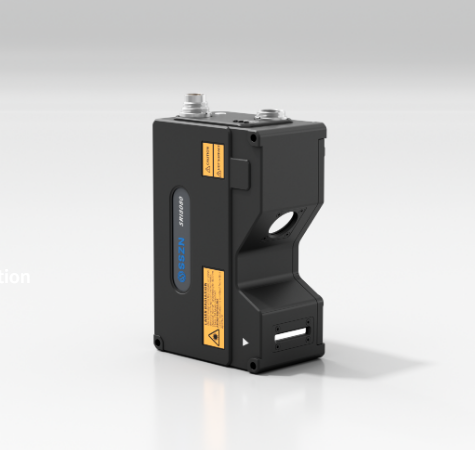
SRI8080
SRI8020
You can also read
How 3D Line Laser Profilers Solve Critical Challenges in Automotive Tire Manufacturing
Nov 09, 2026
Unlocking Flame Cellular Instability: Advanced High-Speed Camera Flame Imaging with the SinceVision SH8 Series
Oct 09, 2026
Analyzing Brittle Fracture in Tomato Roots: A SinceVision High-Speed Camera & DIC Experiment for Agricultural Robotics
Sep 01, 2026
3D Laser Profiler for Lithium-Ion Battery Top Cover Bonding Height Measurement
Aug 14, 2026
Observation of Embryonic Fibroblasts with sCMOS Camera for Multichannel Imaging
Jun 23, 2026



 Compare
 Clear the comparison bar

