










SinceVision SH2-203 High-Speed Camera Empowers Research on the Hybrid Dynamics of Vibration-Driven Bristle Robots
Central South University researchers utilized the SinceVision SH2-203 high-speed camera (1000–2000 FPS) paired with Smotion-H tracking software to capture millisecond-level transient dynamics of a vibration-driven bristle robot. Published in Chaos, Solitons & Fractals, the experimental data validated theoretical hybrid dynamics models, confirming contact-force zero-crossing events, foot liftoff, and two distinct takeoff modes (leg-lifting vs. ground-pushing) across variable PWM duty cycles.
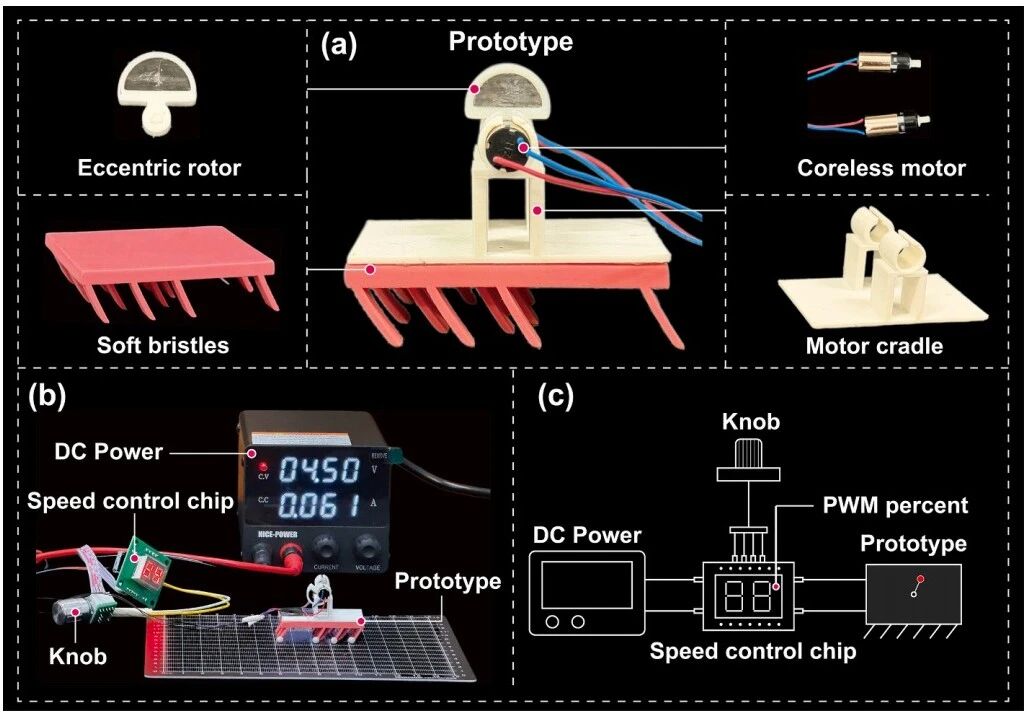


SinceVision high-speed camera empowers research on the hybrid dynamics of vibration-driven bristle robots: an interpretation of experimental methodology based on the study of hybrid dynamics of vibration-driven bristle robots.
In robotics dynamics research, there is always a gap between theoretical models and physical reality that requires iterative validation. When the temporal scale of motion narrows to milliseconds and the spatial scale shrinks to millimeters, conventional measurement methods often struggle to satisfy the requirements for both high temporal resolution and high spatial resolution simultaneously. Against this backdrop, high-speed cameras have become essential experimental instruments connecting theoretical derivations with empirical validations. Taking the paper "Hybrid crawling–jumping dynamics of a vibration-driven bristle robot" published in Chaos, Solitons and Fractals, this article systematically interprets the experimental design, data extraction, and validation logic of high-speed cameras in hybrid dynamics research.
I. Research Background
Vibration-driven bristle robots have long been modeled as pure crawling systems whose locomotion relies on asymmetric friction, assuming that the feet maintain continuous contact with the ground. However, when the excitation intensity increases, the robot intermittently loses ground contact and enters a flight phase, resulting in a "crawling–jumping" hybrid gait. The paper points out that conventional continuous-contact models not only fail to capture jumping events, but also underestimate the robot's locomotion performance.
The paper establishes a hybrid dynamical model consisting of two continuous phases and two discrete events:
Crawling phase: The feet remain in contact with the ground, satisfying the holonomic constraint h=y−lcosθ=0h=y−lcosθ=0; the system is governed by Lagrange's equations;
Flight phase: The feet leave the ground; the system transitions to three-degree-of-freedom ballistic motion, and the center of mass executes projectile motion;
Jump guard: Triggered when the normal contact force FNFN drops to zero;
Landing map: When the feet strike the ground again, the state is updated via angular momentum conservation and geometric constraints.
The analytical expression for the normal contact force derived in the model is:
FN=(m0+m1)(g−lcosθ θ˙2−lsinθ θ¨)−m1RΩ2sin(Ωt)FN =(m0 +m1 )(g−Icosθθ˙2−lsinθθ¨)−m1 RΩ2sin(Ωt)
When FN decreases from a positive value to zero and continues toward negative values, the robot enters the flight phase. This theoretically predicted "contact force zero-crossing" event is precisely the key transient that high-speed cameras must capture.
II. Experimental System Design
The experimental setup of the paper employs two independent optical measurement systems to provide complementary validation.
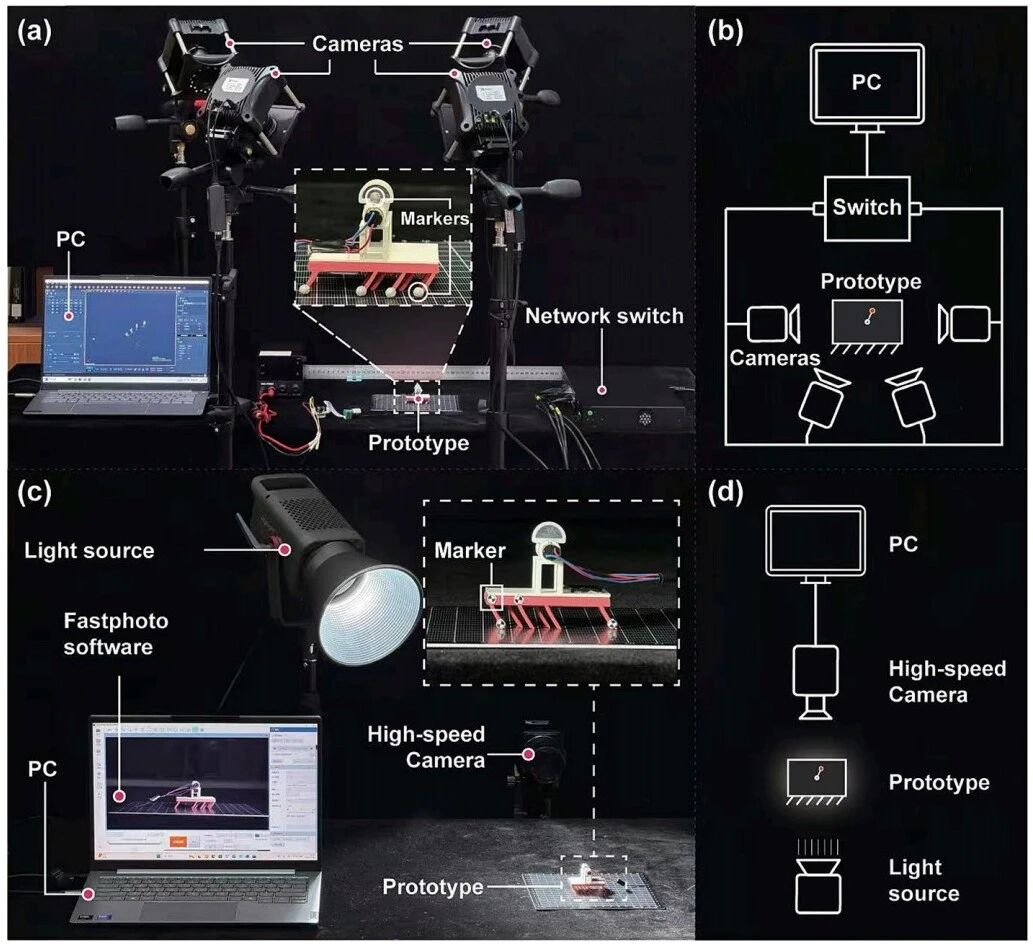
Figure: Components of the Visual System
2.1 Conventional Motion Capture System
Function: Acquire the macroscopic three-dimensional locomotion trajectory of the robot;
Principle: Multiple infrared cameras track reflective marker points on the robot to reconstruct 3D coordinates in the global coordinate system;
Output: Time histories of vertical positions ZbodyZbody, ZtipZtip, and horizontal position XbodyXbody of the body and leg tips.
2.2 High-Speed Imaging System (SInceVision SH2-203-C-512)
Function: Capture transient motion details and identify gait phases;
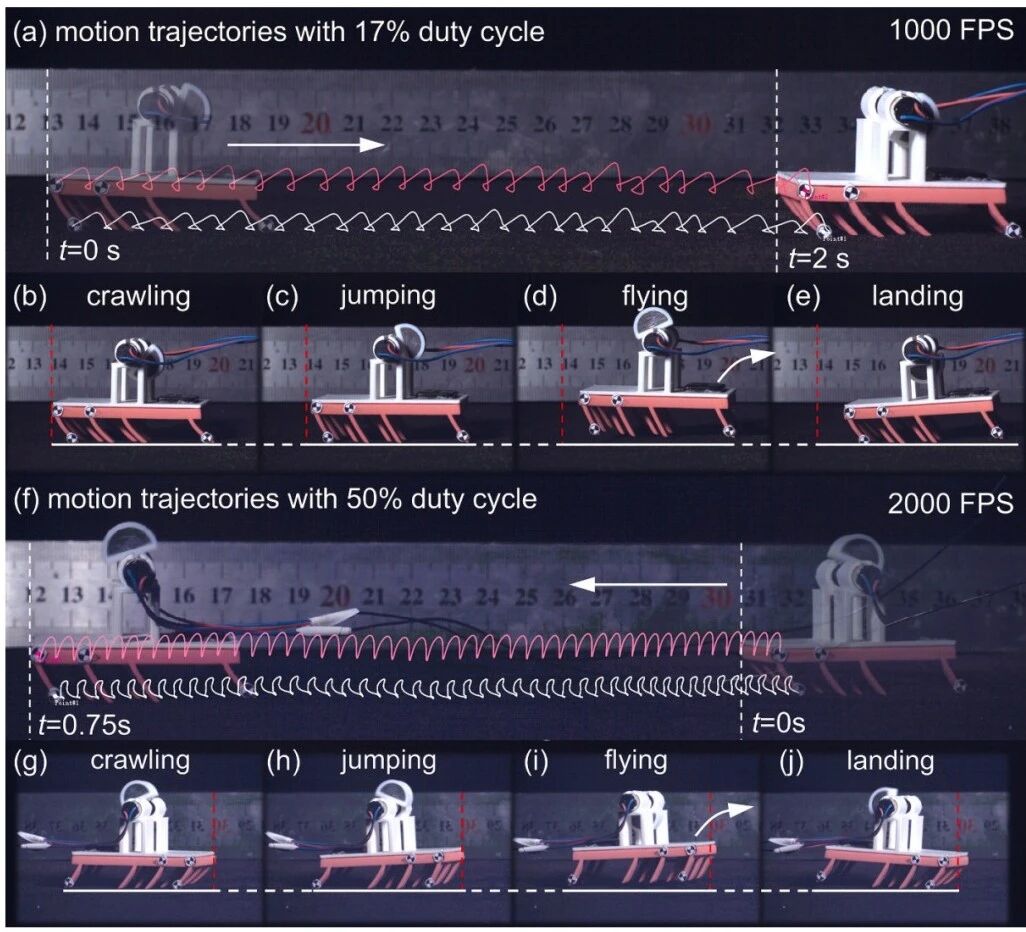
Frame rate: 1000 FPS (17% duty cycle) and 2000 FPS (50% duty cycle);
Marker method: High-contrast grayscale markers affixed to the body and leg tips;
Analysis software: SinceVision Smotion-H motion analysis software, tracking markers frame-by-frame to extract 2D motion trajectories.
The two systems have distinct divisions of labor: the conventional motion capture system delivers long-duration macroscopic data in 3D space, while the high-speed camera provides short-duration, high-frame-rate microscopic visual evidence. The two corroborate each other to guarantee the reliability of experimental conclusions.
III. Experimental Procedure and Data Analysis
3.1 Prototype and Actuation Control
The experimental prototype adopts a two-layer structure:
Soft bristle leg base: Laminated from DPI 8400 elastomer to form inclined compliant legs;
Rigid upper frame: 3D-printed with PLA, comprising the main body platform and motor mounts;
Drive: Symmetrically placed twin coreless DC motors driving eccentric rotors (total mass 10g, eccentric radius 8mm);
Control: External DC power supply + speed control board; motor rotational speed (excitation frequency ff) is regulated via PWM duty cycle, while excitation amplitude AA is fixed at 8mm by rotor geometry.
3.2 Measurement Results from the Conventional Motion Capture System
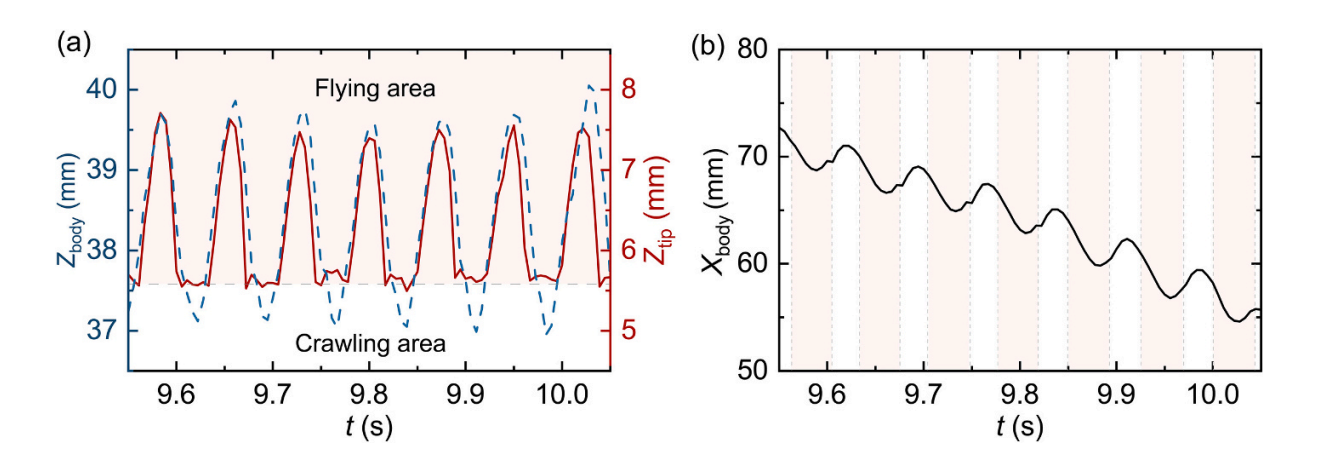
Under a 22% PWM duty cycle, the motion capture system recorded the following time histories:
a: The vertical positions of the body ZbodyZbody (blue dashed line) and leg tips ZtipZtip (red solid line) vary periodically over time;
Crawling phase: ZtipZtip remains virtually constant with leg tips contacting the ground; ZbodyZbody first decreases and then increases, corresponding to the compression and release of the elastic legs;
Flight phase: ZtipZtip exhibits distinct oscillations as the leg tips lift off the ground along with the body.
b: The body horizontal position XbodyXbody shows a monotonic trend superimposed with small periodic oscillations, confirming that the periodic hybrid gait generates net displacement.
3.3 Visualization Results from the High-Speed Camera
The SinceVision SH2 high-speed camera recorded complete motion cycles under two duty cycles:
| Duty Cycle | Frame Rate | Direction of Motion | Average Velocity | Data |
| 17% | 1000 FPS | Left to right | Approx. 9.5 cm/s | Moved approx. 19 cm in 2 s |
| 50% | 2000 FPS | Reverse | Approx. 24.8 cm/s | Moved approx. 18.6 cm in 0.75 s |
Figures a and f illustrate the motion trajectories under the two duty cycles, respectively: the white curve denotes the leg-tip trajectory, and the red curve denotes the body trajectory. The trajectories exhibit prominent periodic arcs, corresponding to the crawling–jumping cycles.
Figures b–e and g–j display four representative stages within a single cycle:
Crawling: The legs undergo evident compression while the robot moves along the ground;
Jumping: The legs nearly restore their original angle, and the body is about to take off;
Flying: A visible gap emerges between the legs and the ground;
Landing: The legs re-engage the ground and compress, preparing for the subsequent crawling phase.
These images directly confirm the two takeoff mechanisms predicted by the theoretical model:
● Leg-lifting: The legs lift while the body moves downward, resulting in shorter flight duration and lower height;
● Ground-pushing: The legs push against the ground while the body moves upward, yielding longer flight duration and higher height, accompanied by stronger impact.
3.4 Duty Cycle-Dependent Performance Data
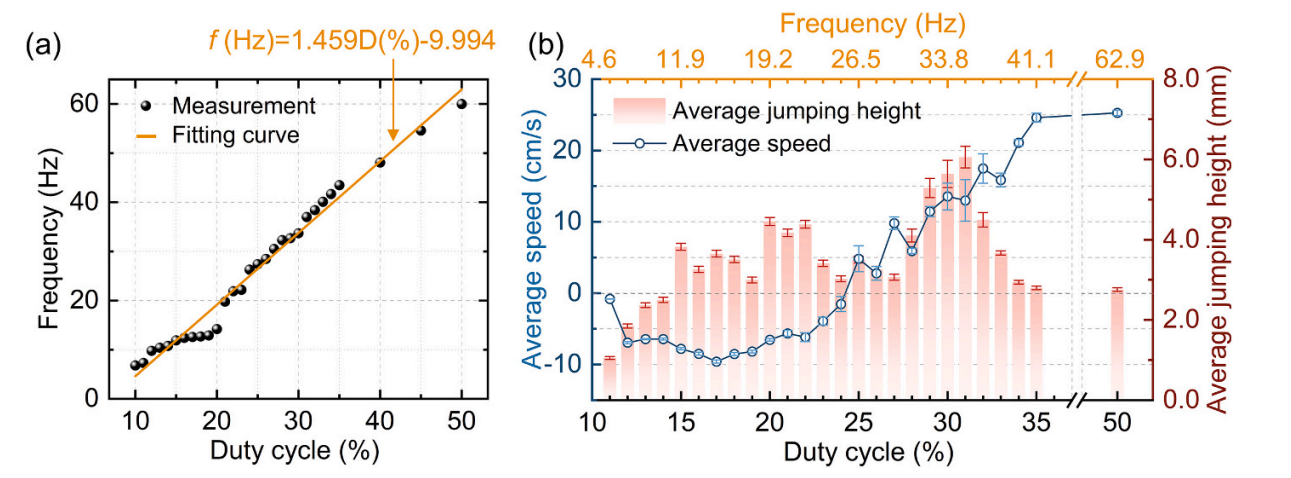
The paper further systematically measures locomotion performance across various PWM duty cycles:
Figure a: Linear calibration relationship between excitation frequency and duty cycle, with the fitted curve f(Hz)=1.459D(%)−9.994;
Figure b: Variation of average locomotion velocity and average jump height with duty cycle;
10% duty cycle: Velocity is nearly zero; jump height is approx. 1 mm, indicating only minute hops;
17% duty cycle: Velocity reaches the maximum reverse value of approx. -10 cm/s;
25%–35%: Velocity gradually decreases, crosses zero, and turns positive;
35%–50%: Velocity stabilizes at approx. 25 cm/s, with jump height maintained at 6–7 mm;
Error bars show that near the 25%–30% duty cycle, direction reversal causes increased trial-to-trial variance.
3.5 Cross-Validation Between Numerical Simulation and Experiments
The paper establishes a multibody dynamics model to compare against the hybrid theoretical model:
● Hybrid Theoretical Model Figure a: Simulation process and foot-tip trajectory, showing a net displacement of 0.4 m in 5 s and an average speed of 0.08 m/s;
● Hybrid Theoretical Model Figure 10b: Comparison of horizontal displacement x(t)x(t) between theoretical (red dashed line) and simulation (blue solid line) results, showing consistent trends and fluctuation frequencies;
● Hybrid Theoretical Model Figure 10c: Comparison of jump height h(t)h(t) pulse trains, with both models predicting similar peak timing and repetition rates;
Narrow pulses, low peaks → Leg-lifting events (short separation time, small gap);
Wide pulses, high peaks → Ground-pushing events (long separation time, large gap).
Both simulation and theory replicate the two takeoff modes, validating the accuracy of the hybrid dynamical model.
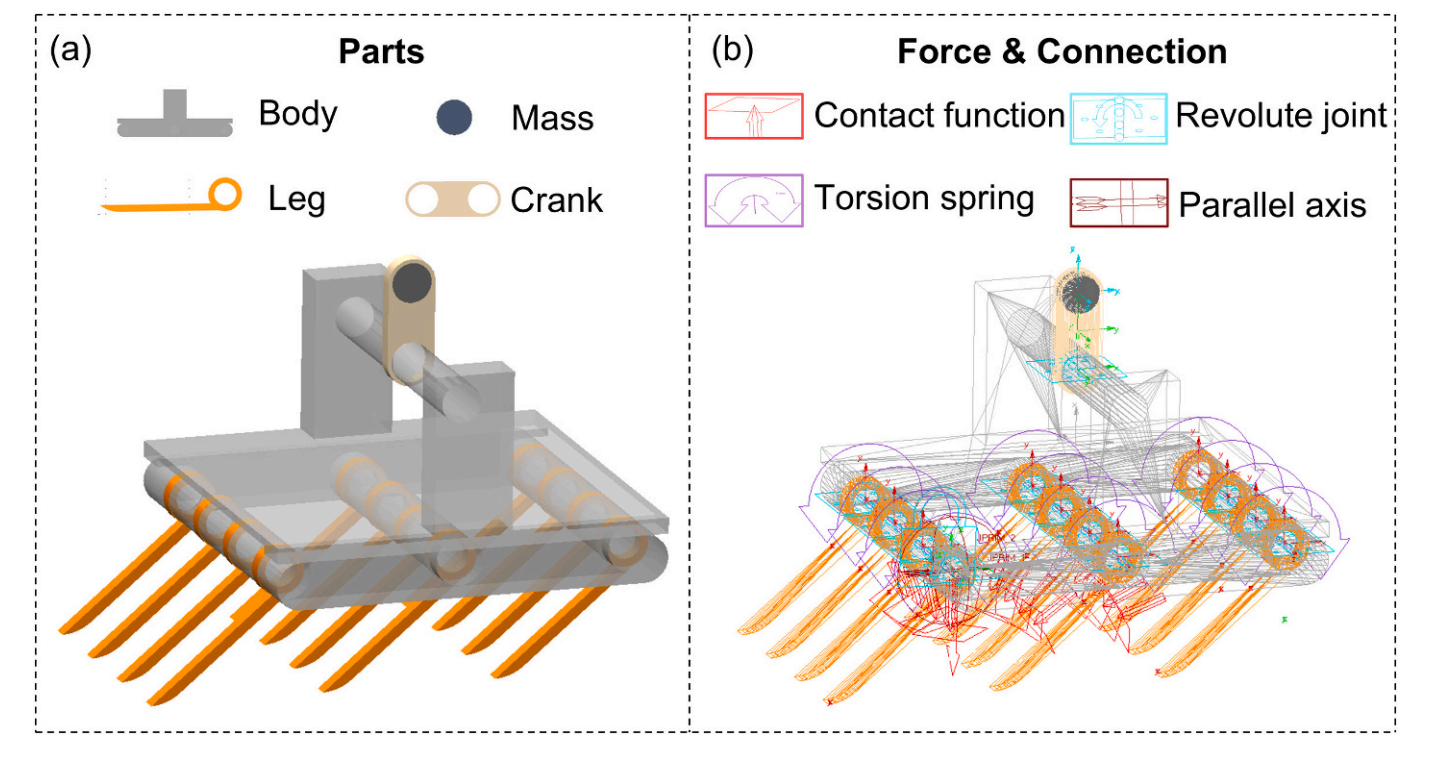
Figure: Multi-body dynamics model
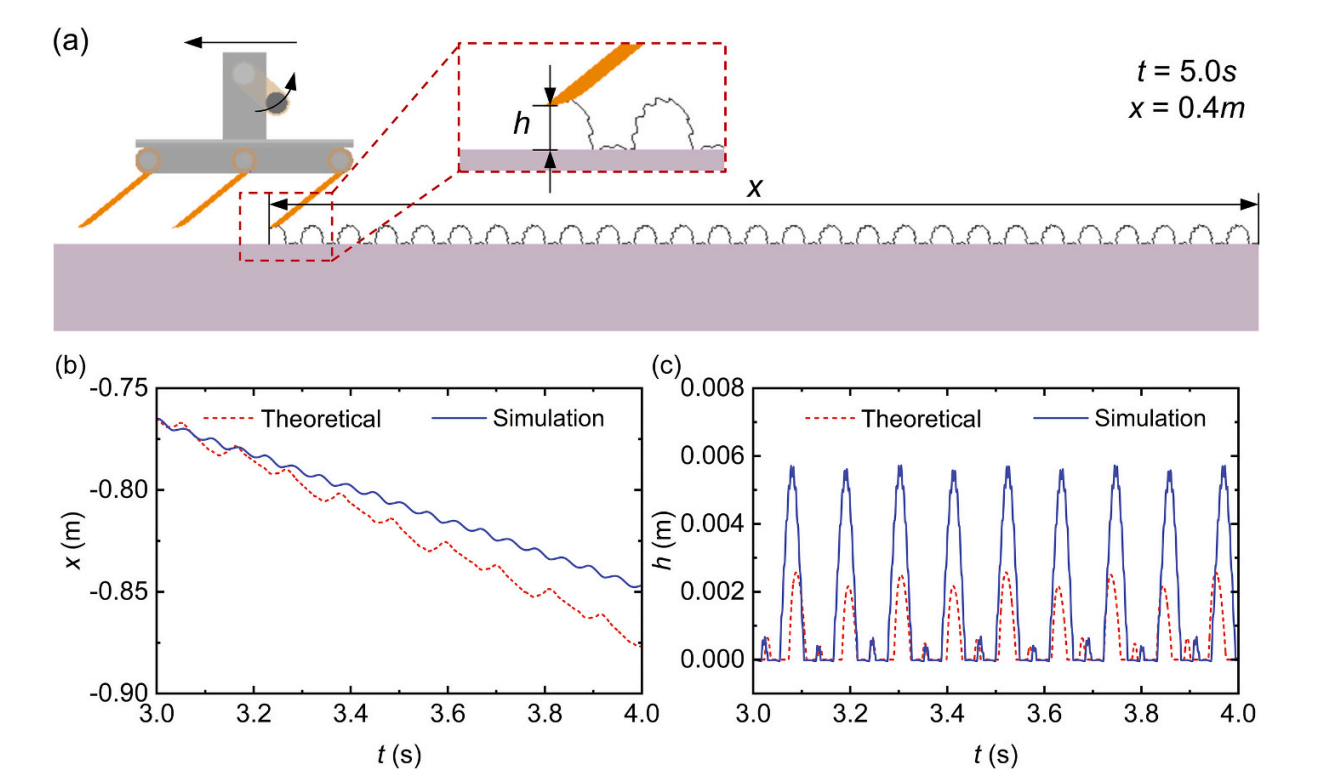
Figure: Theoretical model of mixing
IV. Experimental Conclusions
Through theoretical modeling, numerical simulations, and prototype experiments, the paper reaches the following core conclusions:
Existence of hybrid gaits: Under strong excitation, vibration-driven bristle robots do not purely crawl; instead, they exhibit a "crawling–jumping" hybrid gait, where a single cycle can contain multiple crawling and flight phases (C1→F1→C2→F2).
Two takeoff mechanisms: Leg-lifting and ground-pushing are two takeoff modes with distinct physical mechanisms. The former produces low-altitude, short flights, while the latter produces high-altitude, long flights with stronger impacts. Parameter maps indicate that the ground-pushing mechanism occurs only under specific frequency–amplitude combinations.
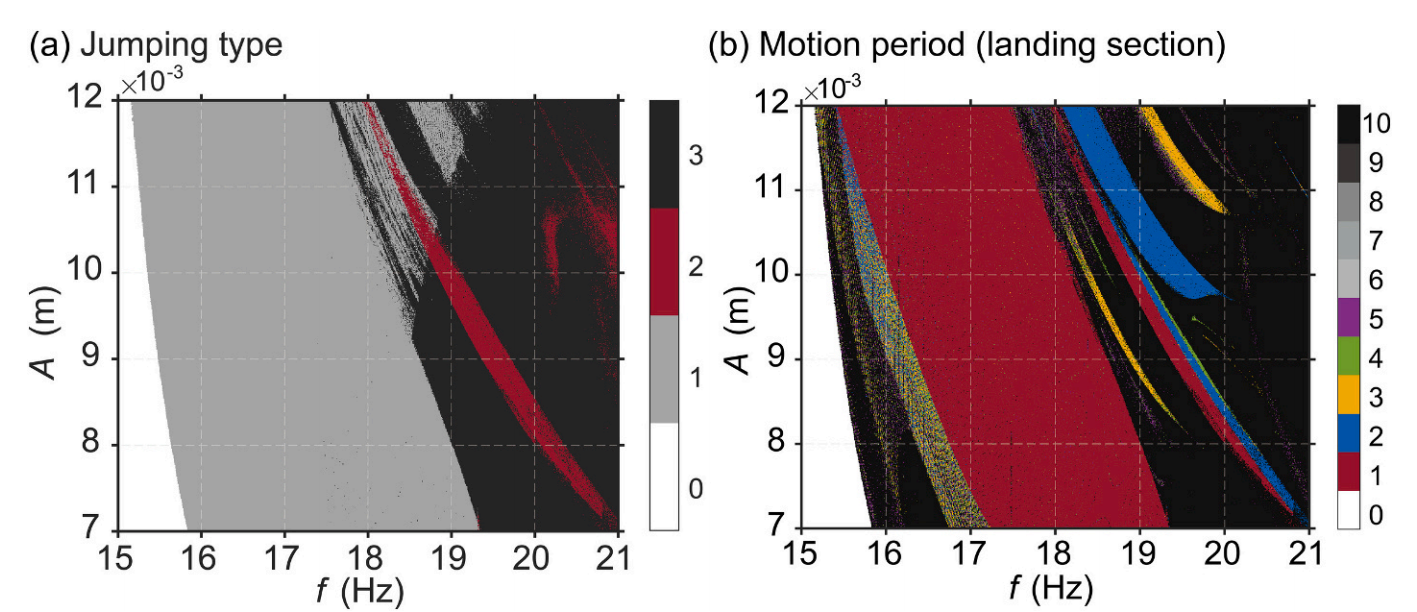
Parametric dependency of locomotion performance: Average jump height and average velocity display distinct regional distributions on the frequency–amplitude plane. Sustained jumping occurs only within a specific diagonal band above approximately 18 Hz and is tightly coupled with the ground-pushing mechanism and regular periodic responses.
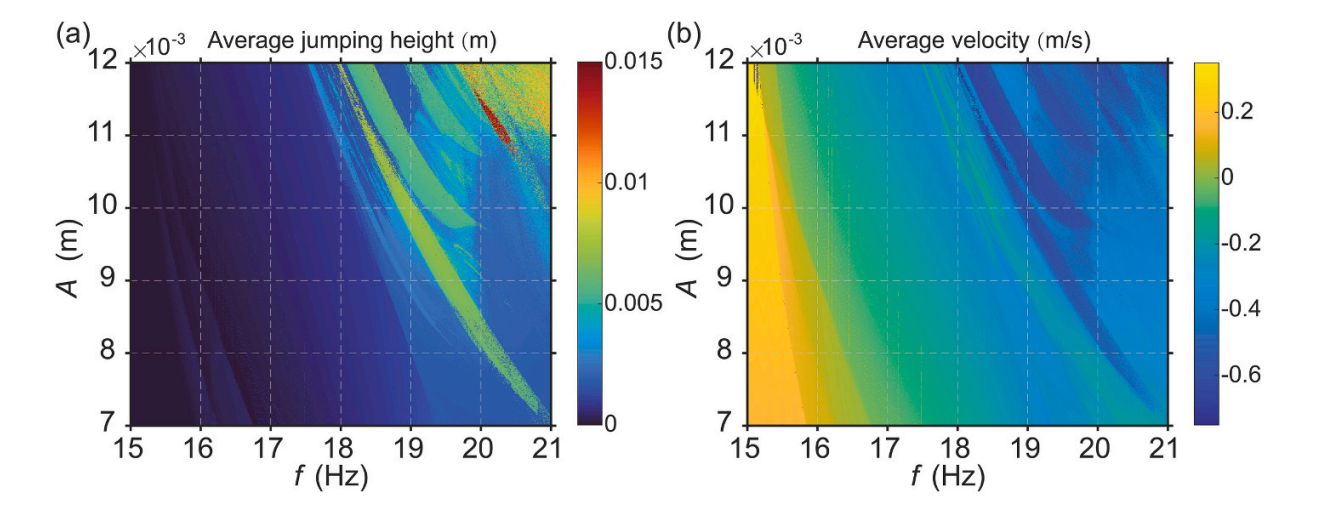
Direction reversal phenomenon: As frequency increases, the robot gradually transitions from forward crawling to backward motion, with the magnitude of velocity actually increasing in strong-jumping regions. Experiments confirmed opposite directions of motion under 17% and 50% duty cycles.
Validation value of high-speed cameras: The transient images and trajectory data delivered by high-speed photography directly corroborate the flight phases and two takeoff modes predicted by the theoretical model, providing irreplaceable empirical evidence for hybrid dynamic modeling.
V. Technical Significance and Application Outlook
This study highlights the transition of high-speed cameras from "auxiliary recording tools" to "core measurement instruments." When the temporal scale of motion shortens to milliseconds, transient events such as contact force dropping to zero, foot liftoff, flight, and landing cannot be fully captured by conventional sensors. High-speed cameras, operating atframe rates of 1000–2000 FPS, transform these processes into frame-by-frame analyzable image data. Then directly corroborating the flight phases and two takeoff mechanisms predicted by theoretical models - serving not merely as visual documentation, but as the starting point for quantitative measurement.
By tracking grayscale markers and analyzing images, the high-speed camera extracts parameters such as displacement, velocity, and jump height, establishing three-way cross-validation alongside the motion capture system and theoretical models, and supplying a solid experimental foundation for hybrid dynamics research.
More importantly, this experimental paradigm of "theoretical prediction, high-speed photography validation and parameter sweep statistics" possesses broad generalizability. In domains such as flexible robot deformation observation, micro/nano-manipulation transient capture, biomechanical high-speed motion analysis, and vibration/impact response research, high-speed cameras can likewise convert invisible transient processes into scientific evidence that can be repeatedly examined and accurately quantified.
When researchers encounter physical phenomena too fast for the human eye to resolve and too elusive for conventional sensors to fully record, a reliable high-speed camera often serves as the key to unlocking new discoveries. Please contact our team for demo/sample/quote for SH2 Series camera.
References:
Paper Title: Hybrid crawling–jumping dynamics of a vibration-driven bristle robot
Journal: Chaos, Solitons & Fractals* (Elsevier, ISSN: 0960-0779)
Authors: Yiyang Gao, Yingli Li, Fei Qi, Song Yao, Yong Peng
Affiliation: Central South University, School of Mechanical and Electrical Engineering
Equipment Utilized: SinceVision SH2-203-C-512 High-Speed Camera & Smotion-H Motion Analysis System
DOI No: 10.1016/j.chaos.2026.118228

Featured Camera
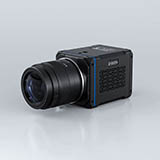
SH2-203
You can also read
Unlocking Flame Cellular Instability: Advanced High-Speed Camera Flame Imaging with the SinceVision SH8 Series
Oct 09, 2026
Analyzing Brittle Fracture in Tomato Roots: A SinceVision High-Speed Camera & DIC Experiment for Agricultural Robotics
Sep 01, 2026
3D Laser Profiler for Lithium-Ion Battery Top Cover Bonding Height Measurement
Aug 14, 2026
Observation of Embryonic Fibroblasts with sCMOS Camera for Multichannel Imaging
Jun 23, 2026
Automating Automotive Body Gap Detection with the SinceVision SR8060H 3D Laser Profiler
Jun 05, 2026



 Compare
 Clear the comparison bar

