










Automating Automotive Body Gap Detection with the SinceVision SR8060H 3D Laser Profiler
This article details how the SinceVision SR8060H 3D laser profiler revolutionizes automotive body gap and surface variation inspection. By replacing subjective manual tools with robotic arm vision guidance and advanced point cloud algorithms, the SinceVision system guarantees a repeatability accuracy of 0.1 mm and a total cycle time of under 70 seconds per vehicle.


Introduction: The Shift from Manual Gauges to SinceVision Automation
Modern automotive manufacturing demands absolute precision, rendering legacy measurement tools obsolete for high-volume production lines. Why are traditional manual feeler gauges failing in modern automotive quality control? The reality is that manual tools are inherently subjective, prone to human error, difficult to quantify for digital records, and fundamentally incapable of inspecting complex aerodynamic contours or transparent materials reliably.
To meet today's strict manufacturing standards, plant engineers require high-precision, high-speed, and adaptable automation. Enter the SinceVision SR8060H: a state-of-the-art automated gap inspection system designed specifically to conquer the toughest automotive measurement challenges.
By deploying this specialized 3D laser profiler equipped with advanced point cloud algorithms and robotic arm vision guidance, SinceVision 3D sensor guarantees a repeatability accuracy of 0.1 mm and a total cycle time of ≤70 seconds per vehicle. This bottom-line capability eliminates measurement bottlenecks, ensuring rapid, flawlessly executed automotive quality control.
The Engineering Challenge: Complex Geometries & Material Diversity
In an era of hyper-stylized vehicle designs, performing comprehensive surface variation measurement across an entire chassis is a formidable engineering challenge. Production lines frequently process mid-size to large vehicles with standard dimensions of 4752 mm (L) × 1804 mm (W) × 1520 mm (H). Inspecting these expansive surfaces requires dynamic tracking and extreme adaptability.
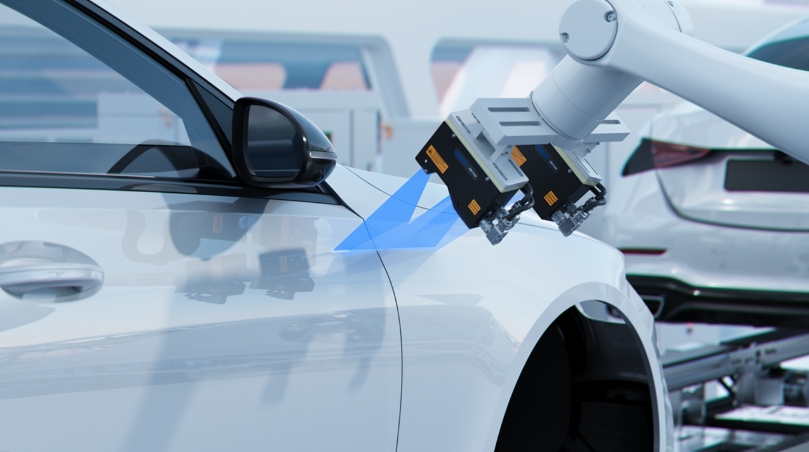
Image: 3D laser profiler scanning automotive body
Managing Paint Variation and Adaptive Exposure
Automated vision systems traditionally struggle with varied surface reflectivities. A single production run may feature vehicles painted in gray, white, black, and red. Matte black paint absorbs laser light, while highly reflective white or glossy red paints scatter it, often blinding standard sensors. To maintain continuous automotive body gap detection, inspection hardware must feature intelligent, adaptive exposure controls capable of adjusting laser intensity and sensor gain in milliseconds as the robot traverses different colored panels.
How do you measure body gaps on transparent automotive parts like headlights?
This is one of the most persistent hurdles in modern assembly. Standard optical sensors fail on glass and transparent plastics because the laser beam penetrates the material rather than reflecting back to the imager, causing data loss or distorted readings. Furthermore, measuring the flushness between a highly reflective metal hood and a transparent polycarbonate headlight introduces severe contrast differentials. Addressing this requires a specialized sensor capable of direct, clear imaging on transparent surfaces without the need for external sprays or coatings.
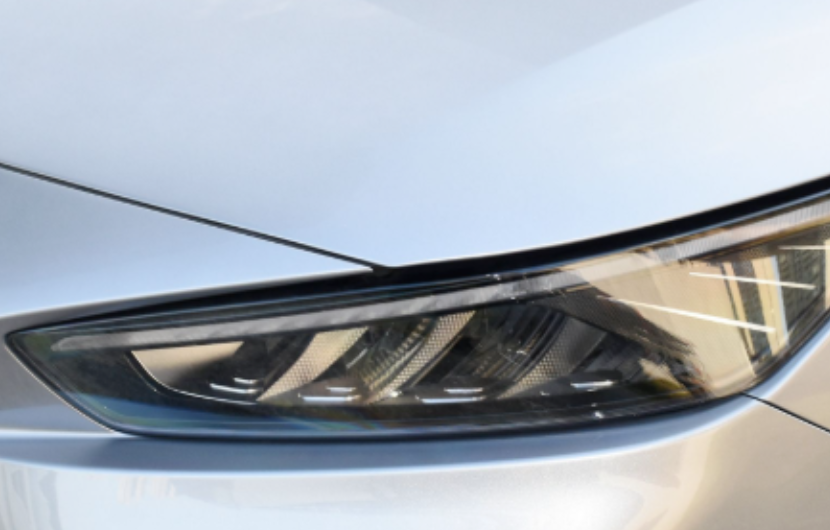
Image: Styles/Body Types
The SinceVision SR8060H Breakthrough
To solve these multi-layered challenges, SinceVision Intelligence developed the SR8060H 3D laser profiler. Engineered for the specific rigors of tier-one automotive assembly, this hardware acts as the core of a fully automated gap inspection system.
Innovative Optical Layout: Eliminating Blind Spots
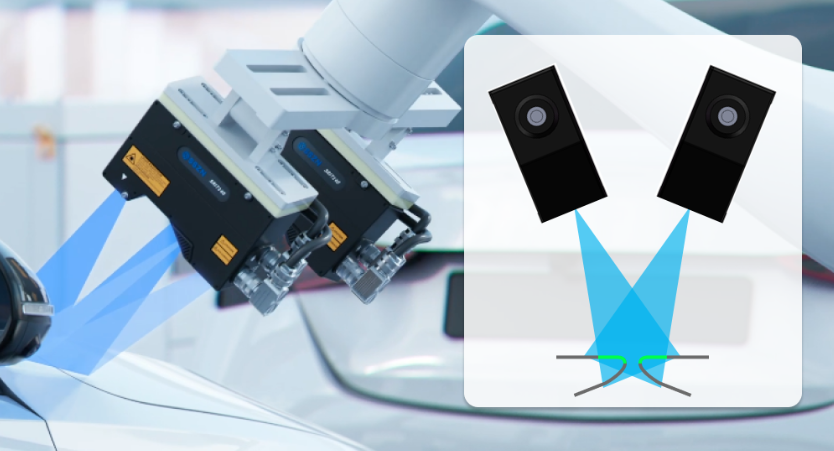
Deep body gaps and sharply curved aerodynamic panels often create shadows that obscure the field of view for single-lens sensors. The SinceVision SR8060H utilizes an innovative optical layout featuring a dual-phase camera with opposing tilt angles. This stereoscopic approach reconstructs 3D shapes by capturing data from two distinct perspectives simultaneously. By virtually eliminating shadows, occlusions, and blind spots on complex contours, the profiler ensures complete geometry capture, even inside deep V-gaps between the door frame and the B-pillar.
Image: Dual-sensor probes tilted relative to each other
Transparent Material Mastery
Unlike conventional systems, the SinceVision SR8060H is optimized for transparent material defect detection. Through proprietary optical filtering and precise exposure modulation, the profiler captures a sharp, distinct laser line directly on transparent surfaces like headlights, windshields, and panoramic sunroofs. This enables seamless gap and flushness profiling between mixed materials (e.g., painted steel to glass) in a single continuous sweep.
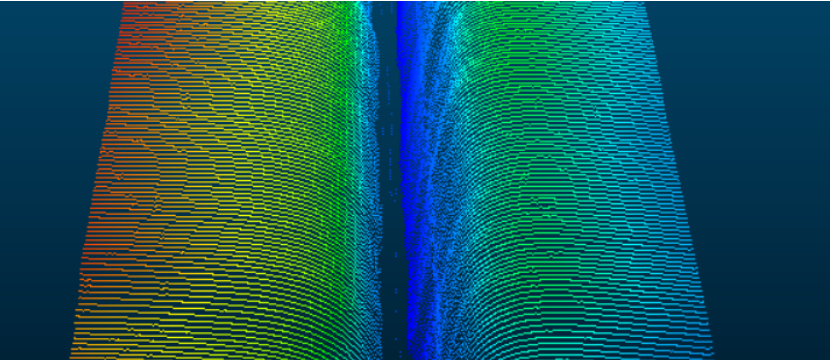
Image: Surface Profile Measurement Diagram
Robotic Arm Vision Guidance & Algorithmic Precision
Hardware alone cannot achieve sub-millimeter tolerances without robust kinematics and processing intelligence. The SinceVision ecosystem pairs its hardware with highly responsive robotic arm vision guidance.
By mounting the SR8060H to a 6-axis robotic arm, the system autonomously navigates the 4752×1804×1520mm vehicle footprint. This dynamic movement allows the system to measure an astounding 50 detection points per minute, efficiently checking doors, hoods, trunks, and lamp housings without stalling the production line.
What is the accuracy of 3D laser profilers in vehicle surface variation testing?
When utilizing the SinceVision system, manufacturers consistently achieve a repeatability accuracy of 0.1 mm. This strict KPI is achieved through the integration of mature point cloud algorithms. As the robotic arm scans the vehicle, the 3D laser profiler inspection system generates millions of coordinate points.
The SinceVision algorithms instantly filter out noise, reconstruct the localized surface, and calculate the exact mathematical difference between the gap width and the surface elevation (flushness). This ensures that every measurement is strictly objective and highly repeatable, entirely independent of robot positioning micro-variations.
Technical Specifications & KPIs
Below is a breakdown of the performance metrics and operational scope of the SinceVision SR8060H automated gap inspection system:
Parameter | Specification | Technical Benefit |
Target Vehicle Dimensions | 4752 mm × 1804 mm × 1520 mm | Covers full-size sedans, SUVs, and standard automotive frames. |
Total Cycle Time | ≤70 seconds per vehicle | Eliminates assembly line bottlenecks; supports high-volume throughput. |
Inspection Speed | 50 detection points per minute | Rapid robotic arm vision guidance ensures comprehensive coverage. |
Repeatability Accuracy | 0.1 mm | Exceeds strict automotive standards for aerodynamic and aesthetic quality. |
Material Capabilities | Glass, transparent plastic, reflective metal, automotive paint | True multi-material inspection; superior transparent material defect detection. |
Color Adaptability | Gray, white, black, red | Adaptive exposure manages both light-absorbing and light-scattering surfaces. |
Hardware Architecture | Dual-phase camera, opposing tilt angles | Eliminates shadows and optical blind spots on complex surface contours. |
Smart Software: Total Quality Traceability
Data acquisition is only as valuable as data utilization. The SinceVision automated gap inspection system features a comprehensive, factory-ready Smart Software suite.
Engineers interact with a highly intuitive Visual UI that displays real-time status updates, color-coded tolerance mapping (Go/No-Go results), and live 3D profile renderings of the measured gaps. More importantly, the system provides automated detailed data reporting. Every data point from every vehicle is logged, time-stamped, and tied to the vehicle identification number (VIN). This enables total quality traceability, allowing plant managers to perform root-cause analysis on stamping or welding deviations upstream based on historical gap measurement trends.
SinceVision SR8060H: Transparent Material & Contour Test Results
Test Item | Test Result |
Imaging Effect | Gap contours on transparent headlights and windows are imaged completely with high restoration. |
Single Coverage | Camera X-direction field of view is 20 mm; covers a single point at once. |
Sampling Density | X-point spacing of 0.012 mm allows for fine scanning of complex contours. |
Measurement Capability | Accurately calculates gap width and step height (flushness). |
Consistency | Excellent alignment between the digital 3D contour and the physical object with clear geometric features. |
Comprehensive Advantage | Delivers high-precision measurement at rapid inspection speeds. |
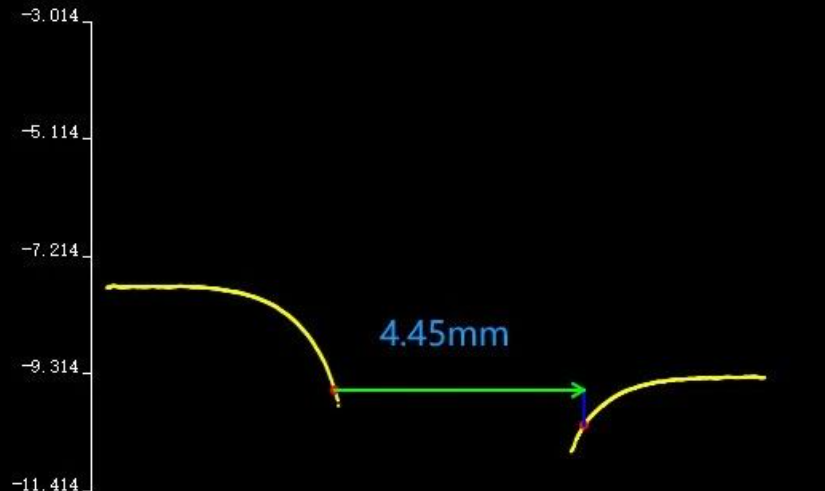
Image: gap detection test
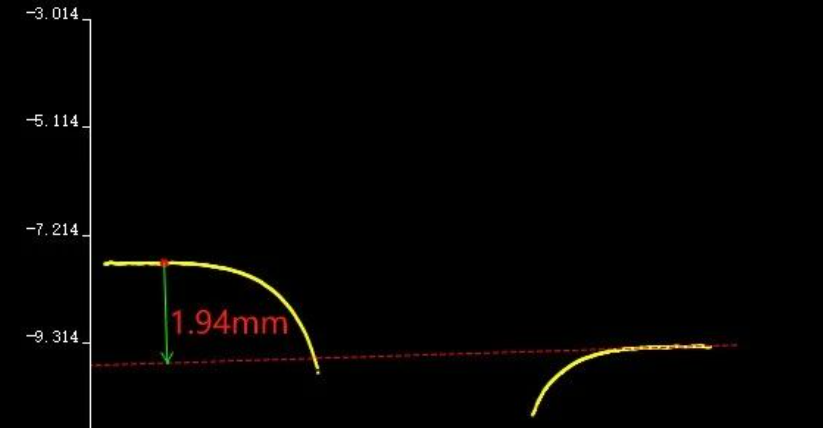
Image: surface difference detection test
Conclusion
The transition from subjective, manual inspection to highly precise automation is no longer optional for automotive manufacturers; it is a baseline requirement. By leveraging the SinceVision SR8060H 3D laser profiler, automotive plants can entirely automate their surface variation measurement processes. With an unmatched repeatability accuracy of 0.1 mm, proprietary dual-phase optics for shadowed geometries, and the unique ability to profile transparent materials, SinceVision Intelligence provides a definitive solution to modern automotive quality control challenges.
Are you struggling to measure tight tolerances on mixed materials or complex vehicle geometries?
Fill out the contact form detailing your specific automotive body inspection challenges, and our technical engineers will provide expert insights on how SinceVision can optimize your production line.
Frequently Asked Questions (FAQs)
1. How does ambient lighting on the factory floor affect 3D laser profiler inspection?
Traditional vision systems can be disrupted by factory skylights, welding flashes, or overhead LEDs. The SinceVision SR8060H mitigates ambient light interference by using highly concentrated laser lines and narrow-band optical filters. This ensures the sensor only processes the specific wavelength of its own laser, maintaining 0.1 mm repeatability accuracy regardless of shifting factory lighting conditions.
2. Can the SinceVision automated gap inspection system integrate with existing factory robotic arms?
Yes. The SinceVision ecosystem is designed to be hardware-agnostic regarding automation platforms. It features standardized industrial communication protocols (such as PROFINET, EtherNet/IP, and Modbus TCP) to seamlessly sync its robotic arm vision guidance with existing industrial robots from major manufacturers like KUKA, FANUC, ABB, and Yaskawa.
3. What makes point cloud algorithms necessary for automotive quality control?
Raw laser reflection only provides unstructured distance data. Mature point cloud algorithms are essential because they mathematically organize this raw data into a 3D topographical map. The SinceVision algorithms intelligently extract the specific geometric features such as edge radiuses, gap widths, and flushness—by distinguishing true vehicle surfaces from optical noise or microscopic dust particles.
4. How does automated gap inspection improve overall vehicle safety and aerodynamics?
While gaps and flushness are often viewed as aesthetic metrics, they directly impact a vehicle's mechanical integrity. Uneven surface variation measurement can indicate underlying chassis misalignment. Furthermore, precise body gap detection ensures that doors, hoods, and windshields are seated perfectly flush, which drastically reduces aerodynamic drag, minimizes wind noise in the cabin, and ensures weather seals function properly against water ingress.

Featured Sensor
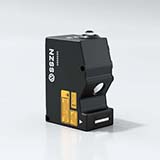
SR8060H
You can also read
Unlocking Flame Cellular Instability: Advanced High-Speed Camera Flame Imaging with the SinceVision SH8 Series
Oct 09, 2026
Analyzing Brittle Fracture in Tomato Roots: A SinceVision High-Speed Camera & DIC Experiment for Agricultural Robotics
Sep 01, 2026
3D Laser Profiler for Lithium-Ion Battery Top Cover Bonding Height Measurement
Aug 14, 2026
Observation of Embryonic Fibroblasts with sCMOS Camera for Multichannel Imaging
Jun 23, 2026
Automating Automotive Body Gap Detection with the SinceVision SR8060H 3D Laser Profiler
Jun 05, 2026



 Compare
 Clear the comparison bar
