










Curved Lens Inspection: How the Spectral Confocal Sensor Solves the Three Biggest Challenges
SinceVision's SCI01045 spectral confocal displacement sensor overcomes the three main hurdles in curved lens inspection: unstable signals on highly transparent materials, missing edge data on high-curvature surfaces, and scratches caused by contact probes. Using white light dispersion and point-by-point scanning, it captures tens of thousands of height points to generate a complete surface profile without touching the lens.
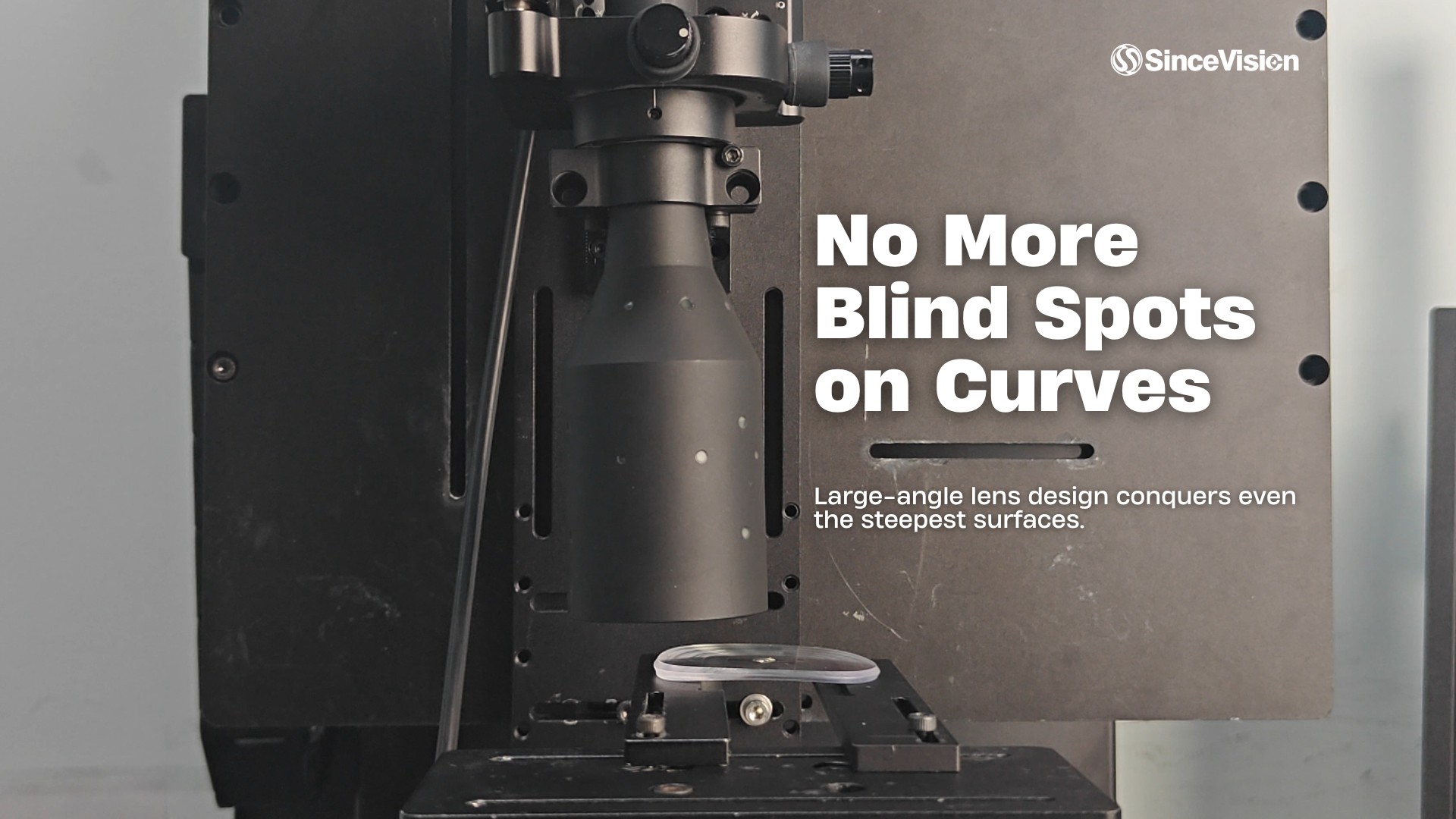


Curved lens inspection in precision optics, AR/VR, automotive cameras, and smartphone production has always been difficult. Three specific problems keep showing up and hurting yield rates: highly transparent materials that confuse conventional sensors, high-curvature surfaces that leave blind spots, and contact probes that scratch delicate optical surfaces.
Many manufacturers still use outdated methods and face data fluctuations, missing edge data, and scrap caused by physical contact. SinceVision's spectral confocal displacement sensor directly addresses these three challenges with a measurement principle that needs no reflected light intensity and never touches the lens.
Challenge 1: Highly Transparent Materials & Traditional Sensors “Can't See” Them
Curved lenses are typically made of highly transparent materials such as glass or PC. Traditional laser displacement sensors depend on the intensity of reflected surface light. When light penetrates the material or undergoes multiple reflections, the signal becomes extremely unstable. The result is inaccurate measurements or complete measurement failures. This is the core obstacle to reliable transparent lens height measurement.
Challenge 2: High-Curvature Surfaces Create “Blind Spots” at the Edges
High-curvature lenses, including aspheric or meniscus designs, feature steep edge slopes. Conventional point sensors or vision systems are limited by their field of view and cannot fully capture the entire surface contour. Critical areas remain unmeasured, leaving data gaps exactly where form errors are most likely to appear.
Challenge 3: Contact-Based Measurement Causes Scratches on Optical-Grade Surfaces
Some production lines still rely on probes or mechanical measuring heads to get height data. Even the slightest contact can scratch or indent precision lenses. Once a lens is marked, it becomes scrap. Without solving these three issues, yield rates stay low and costs stay high.
SinceVision's Spectral Confocal Displacement Sensor Solves These Three Major Challenges
SinceVision's SCI01045 spectral confocal displacement sensor is specifically designed for inspecting highly transparent, high-curvature, and high-polish curved lenses.
Its measurement principle does not rely on light intensity reflection. A dispersive lens splits white light into a continuous spectrum, with different wavelengths focusing at different heights. The reflected light's wavelength uniquely corresponds to the position of the measured point. The sensor delivers stable imaging even on highly transparent materials and operates entirely without contact.
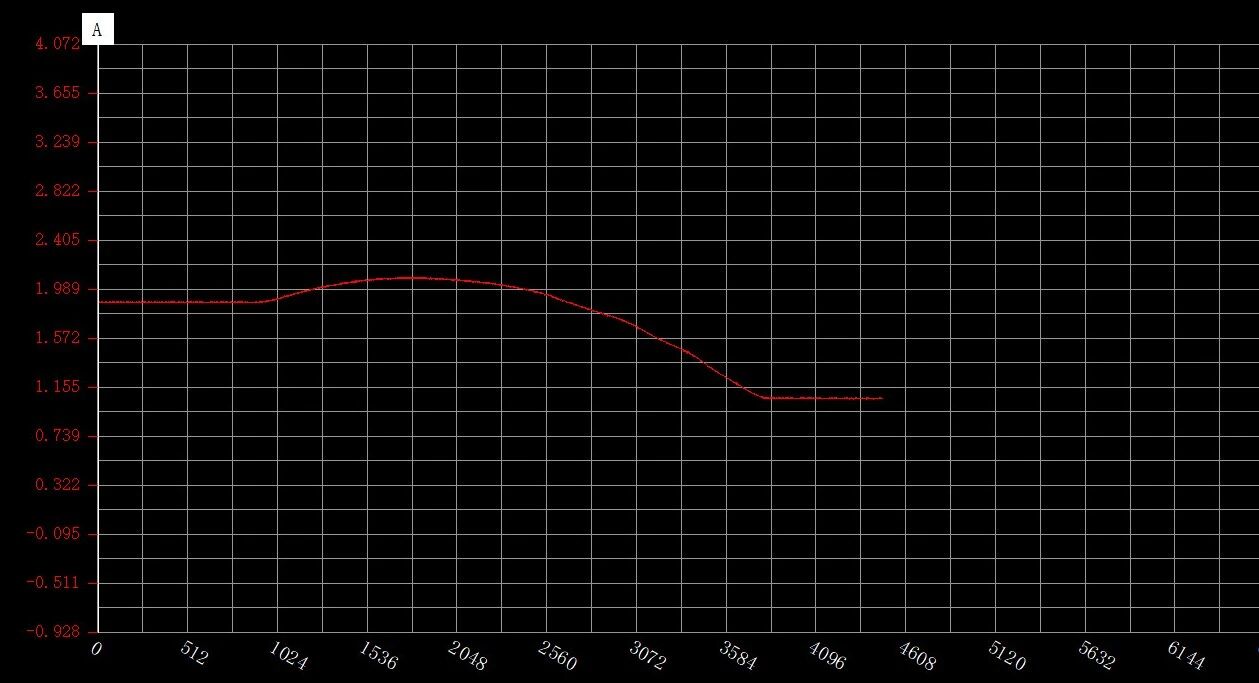
Image: Measured surface profile of the sample
a. Inspection Process: Point-Spectrum Scanning Fits a Complete Profile from Tens of Thousands of Data Points
During the inspection of curved lenses, the SCI01045 sensor follows a preset path and scans point by point. It records the height of every point on the lens surface in real time. After collecting height data from tens of thousands of points, the software automatically fits the data to generate a complete surface profile. This process makes non-contact lens thickness measurement and aspheric lens surface profile inspection both practical and repeatable.
b. Key Quality Control Parameters
Based on the fitted surface profile, the system automatically calculates:
Central single-point thickness
Surface curvature radius
Surface form error compared to design values
These parameters are used directly for pass or fail determination, process feedback, and mold correction. This turns inspection into data-driven quality control.
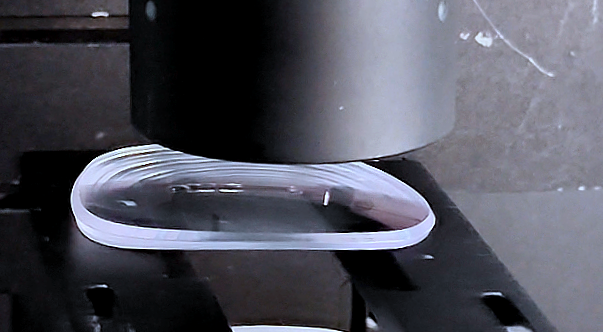
Image: Test sample: curved, highly transparent resin lens
c. Why This Approach Works for Curved Lens Inspection
Challenges of Traditional Methods | Advantages of SinceVision Spectral Confocal Solution |
1. Difficult to image transparent materials | Uses spectral confocal principles independent of light intensity, enabling stable measurement of transparent, mirror-like, and highly reflective materials. |
2. Blind spots on high-curvature surfaces | Large-angle dispersion lens design adapts smoothly to steep curved surfaces, eliminating scan blind spots. |
3. Risk of surface scratches from contact measurement | 100% optical, non-contact measurement path that eliminates the risk of damaging optical-grade surfaces. |
4. Limited information from single-point or sparse data | Captures tens of thousands of simultaneous height data points to generate a complete, high-resolution surface profile. |
d. Typical Application Scenarios
SinceVision's SCI01045 sensor solution has been successfully applied to:
AR/VR aspheric lenses
Curved protective covers for smartphone cameras
Inner-surface lenses for automotive cameras
Small spherical lenses for medical endoscopes
It provides reliable quality control for any precision manufacturing scenario that demands high-precision contour inspection of highly transparent curved lenses. For complex lens geometries, the non-contact lens thickness measurement and aspheric lens surface profile inspection capabilities are especially valuable.
Request a quote or free sample →
Frequently Asked Questions
What makes the SCI01045 suitable for highly transparent curved lenses?
The sensor does not depend on reflected light intensity. It splits white light into a continuous spectrum, with each wavelength focusing at a different height. The reflected wavelength directly indicates the surface position, so it delivers stable data even on clear glass or PC.
Can the sensor measure high-curvature edges without blind spots?
Yes. It scans point by point along a preset path and records height at every location. Tens of thousands of data points are fitted into a complete surface profile, covering steep edge slopes that other sensors miss.
Is the measurement non-contact?
The spectral confocal sensor operates completely without contact. No probe or mechanical head touches the lens, so optical-grade surfaces stay scratch-free.
What parameters does the system automatically calculate?
After profile fitting, the software calculates central single-point thickness, surface curvature radius, and surface form error compared to design values. These feed directly into pass/fail decisions and process adjustments.
Where has this solution been used?
It has been applied to AR/VR aspheric lenses, curved protective covers for smartphone cameras, inner-surface lenses for automotive cameras, and small spherical lenses for medical endoscopes.
If your production line is struggling with curved lens inspection, talk to our team about the SCI01045. Request a consultation or demo →

Featured Sensors
SCI00532
SCI01045
SCI03560
SCI04020
You can also read
Unlocking Flame Cellular Instability: Advanced High-Speed Camera Flame Imaging with the SinceVision SH8 Series
Oct 09, 2026
Analyzing Brittle Fracture in Tomato Roots: A SinceVision High-Speed Camera & DIC Experiment for Agricultural Robotics
Sep 01, 2026
3D Laser Profiler for Lithium-Ion Battery Top Cover Bonding Height Measurement
Aug 14, 2026
Observation of Embryonic Fibroblasts with sCMOS Camera for Multichannel Imaging
Jun 23, 2026
Automating Automotive Body Gap Detection with the SinceVision SR8060H 3D Laser Profiler
Jun 05, 2026



 Compare
 Clear the comparison bar
