










Powertrain Fuel System Quality Control Case Study: 3D Laser Profiler for Automotive Inspection
Powertrain fuel systems demand strict dimensional control and defect detection across engines, transmissions, and fuel components. This case study presents how 3D laser profilers and laser displacement sensors enable high-speed, high-precision inspection in real production environments.
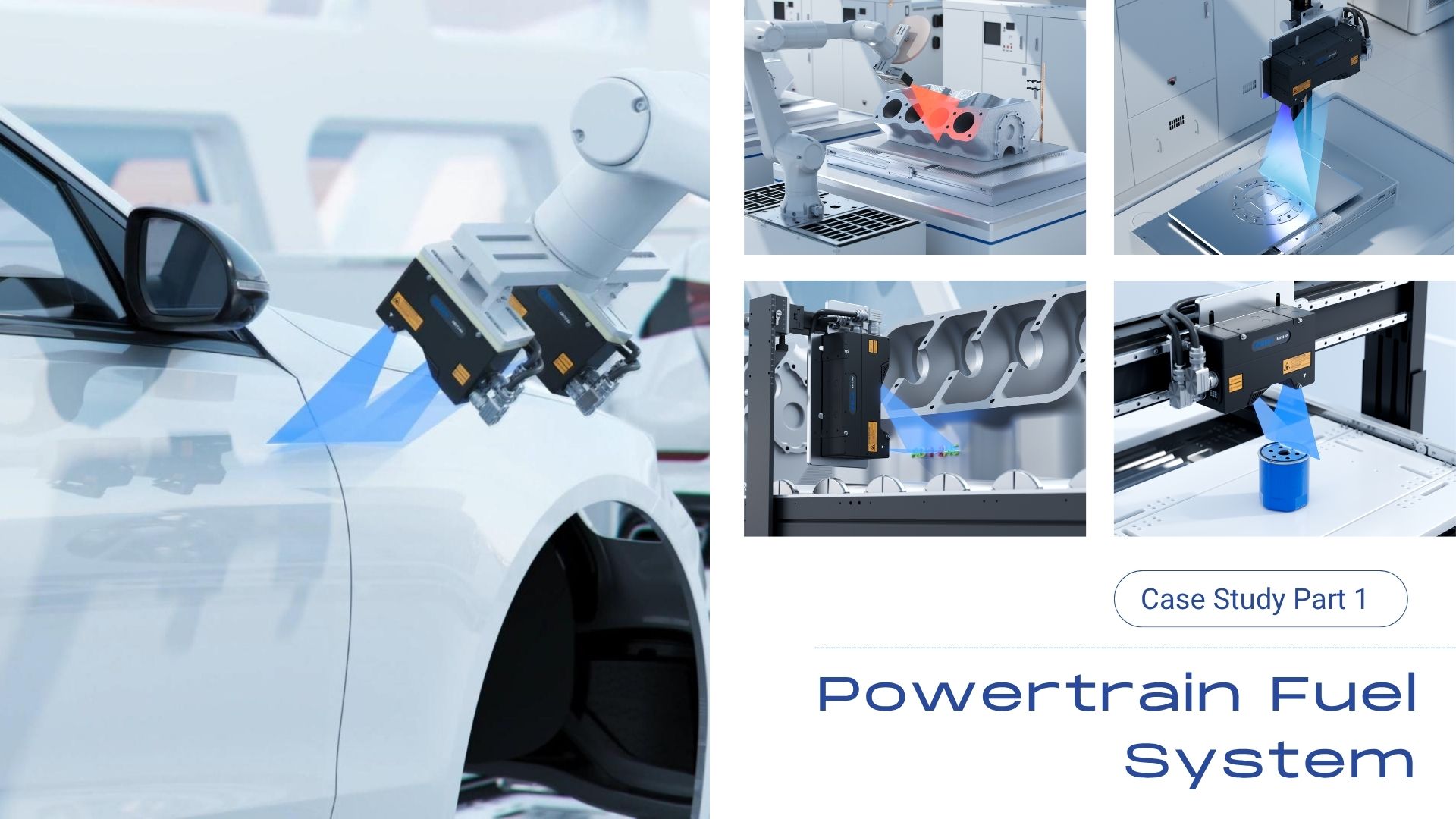


In powertrain manufacturing, micron-level precision is not a luxury. It is a control variable that directly affects sealing performance, assembly fit, combustion stability, durability, and field reliability. As tolerances tighten across engines, transmissions, and fuel components, traditional inspection methods increasingly fall short. Manual checks are slow. 2D imaging can miss height variation and surface topology. Operator judgment introduces inconsistency.
Advanced 3D laser profilers and laser displacement sensors address these limits with automated, repeatable, data-rich inspection. By capturing surface geometry, edge height, defects, stroke motion, and OCR information at production speed, these sensors create a scalable quality control framework across the full powertrain fuel system. The result is higher throughput, lower scrap, improved traceability, and stronger product reliability.
1. The Power of Automated Inspection
A 3D laser profiler is a non-contact metrology system that projects a laser line onto a target surface and measures the reflected profile using laser triangulation. As the part or sensor moves, the system generates dense point cloud data that represents the object in three dimensions. This makes it suitable for inspecting features that are difficult to evaluate with 2D cameras, including height differences, burrs, overlapping regions, edge steps, surface defects, and deformation.
Laser displacement sensors operate on the same core principle, but focus on ultra-high-speed measurement of distance, position, and motion. They are especially effective for dynamic applications such as stroke monitoring, where the key requirement is fast, stable acquisition of motion data with industrial communication support for integration into control systems.
For automotive manufacturing, the technical value is clear: point cloud generation provides geometric truth, high-speed data acquisition supports inline production, and automated algorithms convert raw measurement into actionable quality decisions.
2. Case Study 1 — Fuel System: Engines
A. Grinding of Large Castings
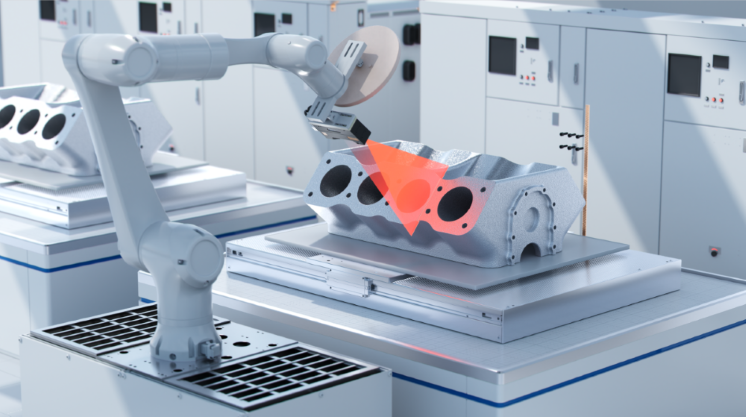
In large casting grinding operations, the goal is to restore the surface of the measured object and use algorithmic path planning to improve polishing efficiency and consistency. This process depends on accurate surface recognition. Any missed burr or defect can affect downstream quality and rework cost.
The integrated SRI series 3D laser profiler is used to obtain point cloud information so that burrs and defect states can be fed back with precision. This enables accurate planning of the polishing machine path and supports a more controlled finishing process.
Key performance advantages include a 650nm red light wavelength, which makes black objects easier to image, and a scanning speed of 720 mm/s, allowing detection to be completed in 1.5s.
B. Cylinder OCR Recognition
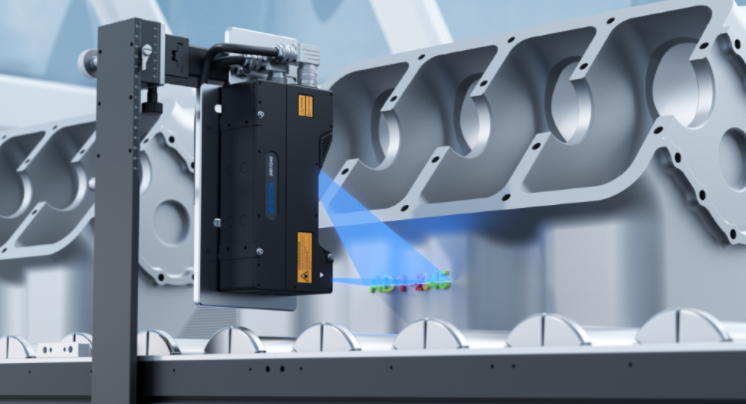
Cylinder OCR recognition is a core requirement for automated production management, quality traceability, and information entry. On curved and irregular surfaces, conventional imaging often struggles with reflectivity and inconsistent focus, which reduces character readability.
Using the integrated SRI series sensor mounted on a robotic arm, horizontal scanning is performed to achieve online flatness detection. For character scanning in irregularly shaped areas, the system delivers more stable image output. The optimized algorithm also stably eliminates reflection interference from the cylinder surface, producing clear imaging for OCR recognition.
3. Case Study 2 — Fuel System: Transmissions
A. Gear Surface Defect Detection
Gear quality directly affects transmission performance, noise, wear resistance, and service life. The inspection challenge is identifying surface defects and bad teeth during production without slowing the line.
The integrated 3D laser profiler scans rotating products and performs online real-time defect detection. This makes it possible to screen surface defects and bad teeth during production rather than after assembly.
A key advantage is stable identification of defect sizes as small as 0.15 × 0.15mm, which addresses the limitations of 2D imaging in complex gear inspection.
B. Detection of Clutch Disc Overlapping and Rivet Defect
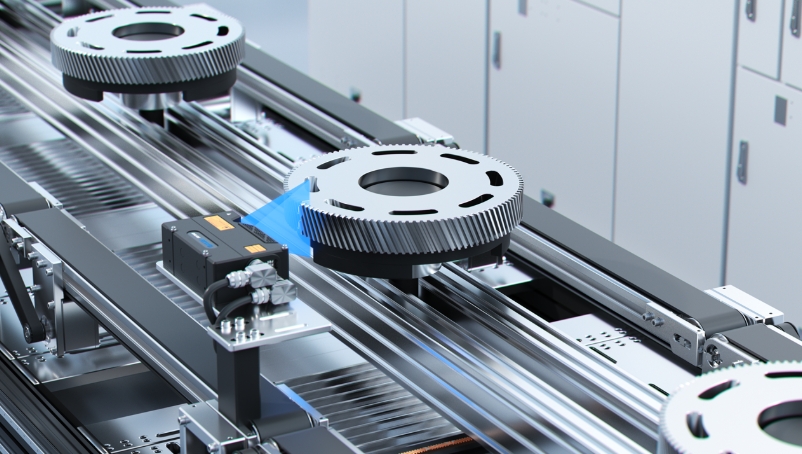
Clutch disc inspection must verify height consistency and detect overlapping and rivet defects with high confidence. Height variation at this stage can lead to assembly issues and quality escapes if not controlled.
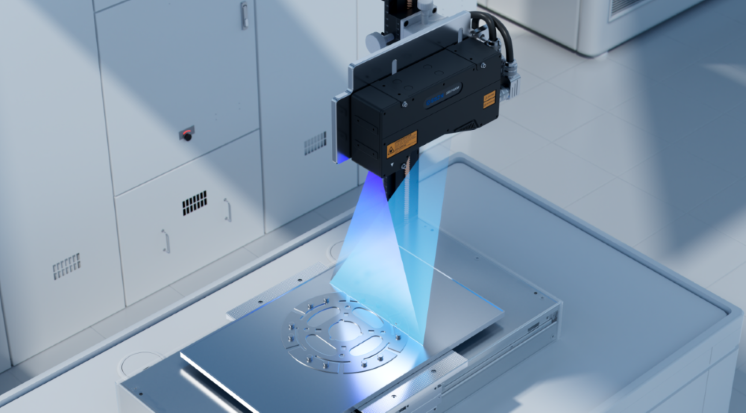
The SRI series 3D laser profiler is installed horizontally, providing full-coverage scanning in a single installation. The added Z-axis point cloud data makes overlapping judgment more accurate, since the system measures real geometry rather than relying on planar appearance alone.
With a scanning speed of 720mm/s, the system outputs results within 1s, supporting high-throughput inline inspection.
4. Case Study 3 — Fuel System: Fuel Components
A. Oil Filter Rubber Ring Height Detection
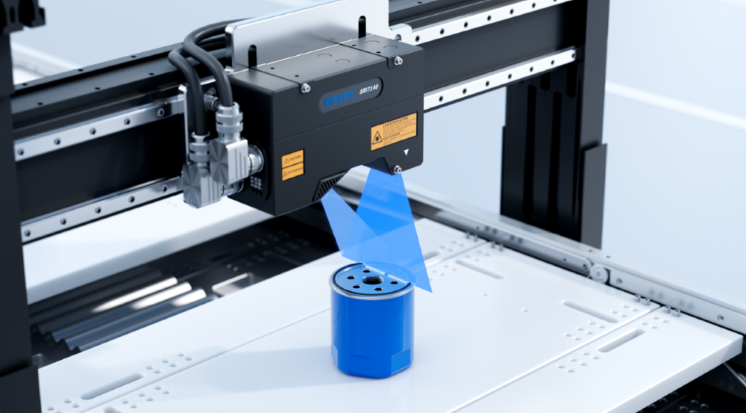
Oil filter sealing performance depends on the precise height of the rubber ring. If the geometry is inconsistent, oil leakage can occur, affecting normal engine lubrication.
Using the integrated SRI series 3D laser profiler with top-mounted and horizontal scanning, the glue shape is completely obtained. This supports reliable inspection of the seal geometry and improves defect detection.
The system meets a repeatability accuracy of 0.02mm for glue height and stably identifies defects with a damage size of 0.2 × 0.2mm.
B. Height Difference Detection of Diesel Filter Element End Cap
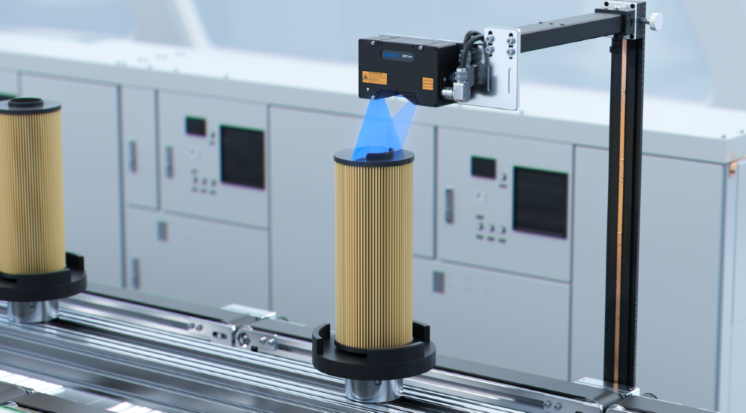
The edge height of the diesel filter element end cap must be controlled to ensure proper sealing. Uneven height can compromise the oil filter's sealing effect and reduce functional reliability.
The integrated 3D laser profiler is installed top-mounted, and real-time inspection is carried out after the product is in place. In 2.5D mode, the system continuously acquires contour lines and achieves a repeatability accuracy of 0.015mm in height difference.
The built-in algorithm detection tool requires no program development and supports real-time TCP result acquisition, making deployment faster and integration simpler.
5. Case Study 4 — Fuel System: Fuel Components
A. Engine Valve Stroke Reciprocating Detection
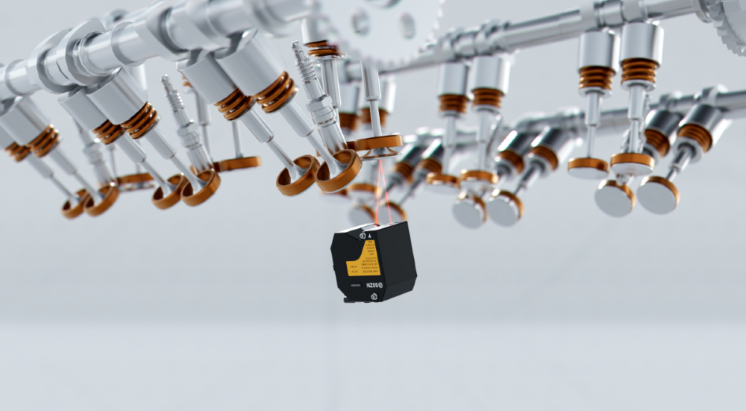
Valve stroke monitoring is essential for combustion stability. Abnormal intake and exhaust valve motion can cause insufficient combustion, power drop, or even engine failure. This makes high-speed, reliable stroke detection a critical control point.
The SG series laser displacement sensor is installed horizontally and provides full-coverage scanning in a single installation. Its highest acquisition rate reaches 590kHz, supporting analog, TCP/IP, RS232, and digital signal communication modes. That combination captures the most complete data for motion monitoring and process integration.
Conclusion: Quality Control That Matches the Demands of Modern Powertrain Manufacturing
Across engines, transmissions, and fuel components, advanced sensing technologies solve specific inspection challenges that traditional methods cannot handle with the same speed or precision. 3D laser profilers provide accurate surface and geometry inspection for burrs, defects, height differences, overlapping regions, and OCR applications. Laser displacement sensors extend that capability into high-speed motion monitoring such as valve stroke detection.
The value is measurable: unmatched precision, fast inline inspection, seamless data integration for traceability, and consistent quality improvement across the powertrain fuel system.
Download the full automotive inspection whitepaper.

You can also read
Unlocking Flame Cellular Instability: Advanced High-Speed Camera Flame Imaging with the SinceVision SH8 Series
Oct 09, 2026
Analyzing Brittle Fracture in Tomato Roots: A SinceVision High-Speed Camera & DIC Experiment for Agricultural Robotics
Sep 01, 2026
3D Laser Profiler for Lithium-Ion Battery Top Cover Bonding Height Measurement
Aug 14, 2026
Observation of Embryonic Fibroblasts with sCMOS Camera for Multichannel Imaging
Jun 23, 2026
Automating Automotive Body Gap Detection with the SinceVision SR8060H 3D Laser Profiler
Jun 05, 2026



 Compare
 Clear the comparison bar
