










SinceVision High-Speed Camera Captures the Millisecond-Scale Thermal Rupture Process of Microcapsules: From Transient Imaging to Analysis of Fire Extinguishing Mechanisms
Published in the Chemical Engineering Journal, researchers at Nanchang University utilized the SinceVision SH3-108 high-speed camera to quantitatively analyze the thermal rupture and fire-extinguishing mechanisms of PMP (perfluoro-2-methyl-3-pentanone) microcapsules. Capturing transient dynamics at 8,000 fps and 1280 × 1240 resolution, the SinceVision imaging system recorded the sub-millisecond timeline of fire suppression: shell rupture at 0.13 ms and complete flame extinction at 0.78 ms.
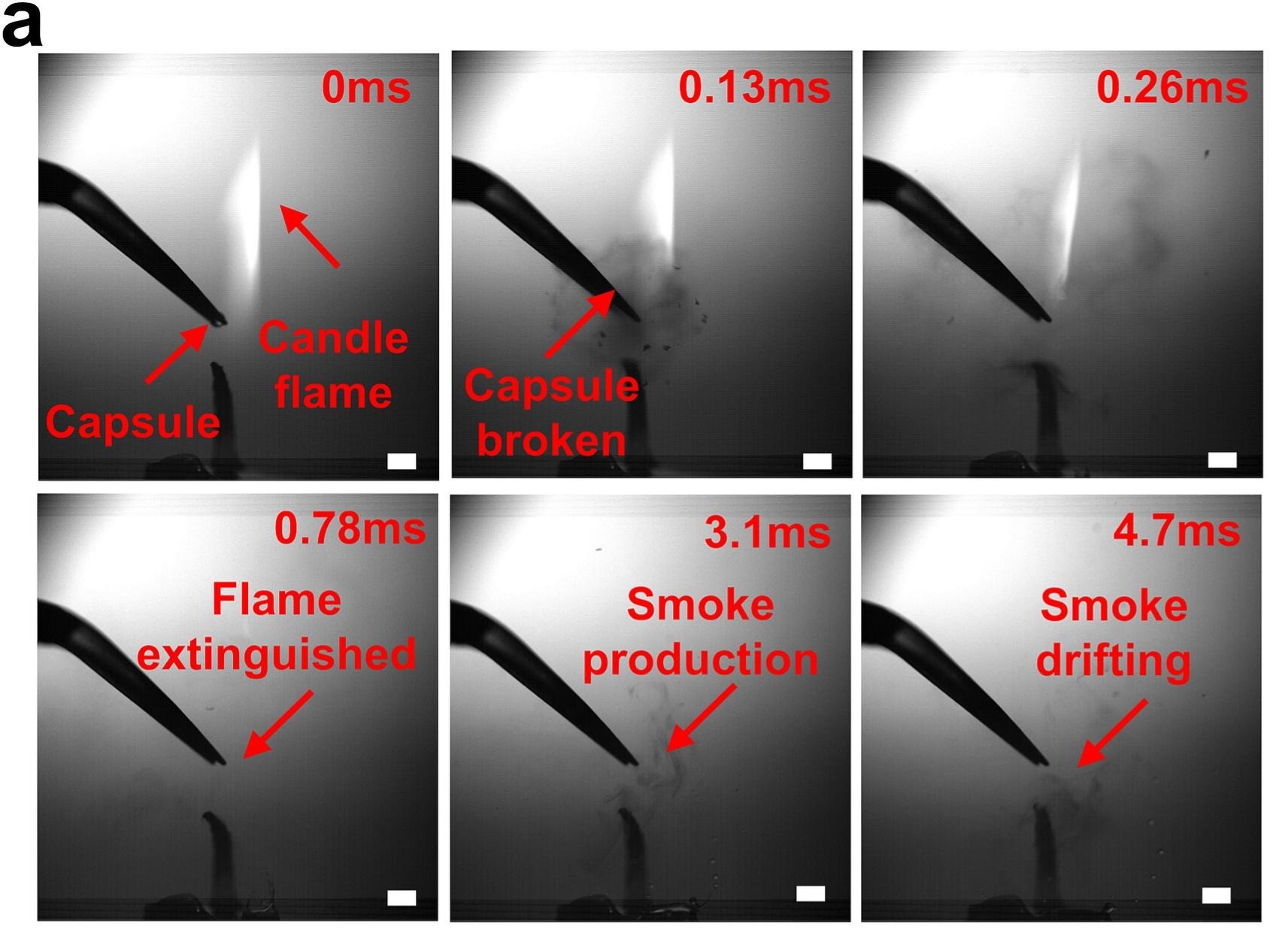


A research team from Nanchang University utilized a SinceVision high-speed camera imaging system to perform continuous high-speed imaging of the thermal rupture and fire-extinguishing processes of a single PMP microcapsule. By combining this with image processing methods, they analyzed the coverage area of the released medium, the release angle, and the evolution of the flame, providing direct dynamic experimental evidence for research into the thermal rupture mechanism and fire-extinguishing performance of microcapsules. The relevant research findings were published in the international journal Chemical Engineering Journal.
1. Experimental Background
Initial fires in enclosed spaces, such as electrical distribution cabinets and lithium-ion battery modules, are characterized by high concealment and a short detection window. Traditional active detection systems often miss the critical timeframe for fire suppression due to response delays.
To address this, the research team developed a passive, self-responsive fire-extinguishing material based on perfluoro-2-methyl-3-pentanone (PMP) core-shell microcapsules. Triggered by heat, these thermosensitive microcapsules rupture their shells to release an internal fire-extinguishing agent, rapidly suppressing the flame. The rupture and release behavior, which includes heating, increased internal pressure, shell rupture, and high-speed ejection, directly influences the coverage area and extinguishing effectiveness.
Because thermal rupture and agent release are rapid transient processes occurring on the order of milliseconds or sub-milliseconds, conventional imaging techniques struggle to resolve them. This makes it difficult to directly observe and quantitatively analyze the associated kinetic behavior.
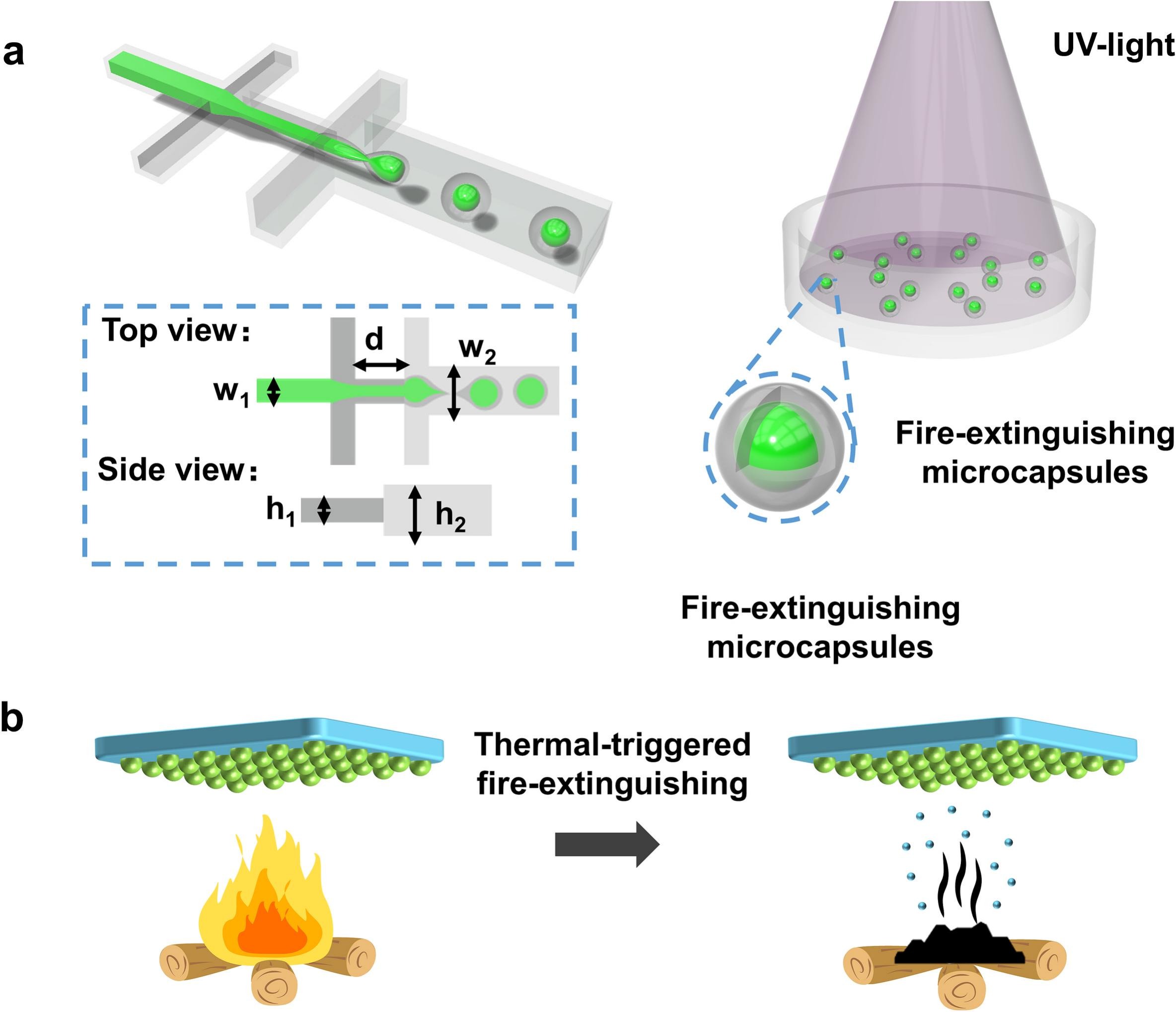
Image 1: The complete sequence of microfluidic generation → thermally triggered explosion → fire extinguishment (originally Fig. 1)
2. Experimental System
Given the rapid and transient nature of the process, the research team developed a specialized high-speed photography experimental system.
A single PMP microcapsule was secured to the surface of a heating plate and heated until it reached thermal rupture conditions. A SinceVision SH3-108 high-speed camera was used to continuously record the entire progression from heating to shell rupture and agent release. Concurrently, computer image analysis was used to post-process the continuous images, extracting the jet plume profile to calculate coverage area and release angle. The high-speed camera played a central role in recording the transient mechanics, while image processing converted the dynamic images into quantifiable data.
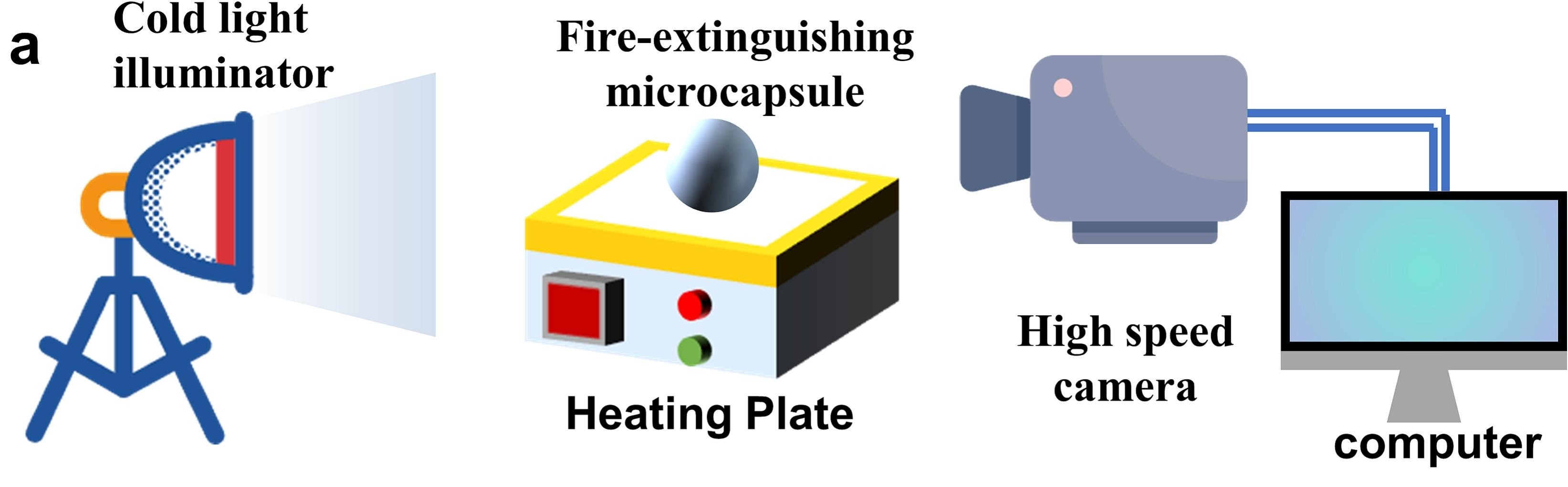
Image 2: High-speed photography setup for microcapsule thermal rupture and the release process (Fig. 4a from the original paper)
3. Experimental Data & Observations
3.1 Thermal Rupture Process and Core Material Release
The camera recorded the thermal rupture on the heating platform at a resolution of 1280 × 1240 and a frame rate of 8,000 fps.
Upon heating, the PMP inside vaporized, increasing internal pressure.
The shell ruptured completely within 0.13 ms, ejecting the core medium outward as a high-speed jet and forming a "micro-explosion" plume.
The coverage area increased rapidly between 0.03 and 0.09 ms and stabilized between 0.12 and 0.15 ms.
The maximum coverage area reached approximately 19 mm², roughly 24 times the projected area of the microcapsule itself (0.8 mm²).
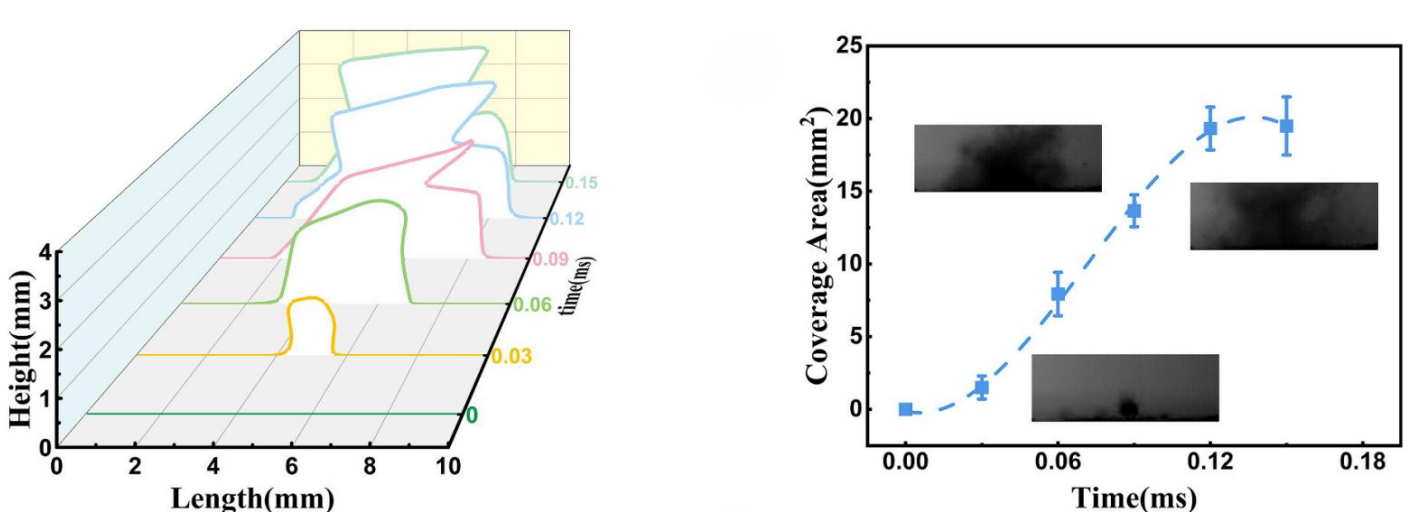
Image 3: A high-speed camera captures the release of the fire-extinguishing agent following the rupture of microcapsules and the resulting changes in coverage area (Fig. 4b/c from the original paper)
The study also verified that release direction is controllable. By varying the attachment position of the microcapsules on the substrate, researchers found that bottom fixation yielded a release angle of approximately 60°, while top fixation yielded an angle of approximately 25°. This validates that boundary conditions influence the initial location of shell rupture, regulating the jet direction and providing experimental support for the structural design of flexible fire-extinguishing patches.
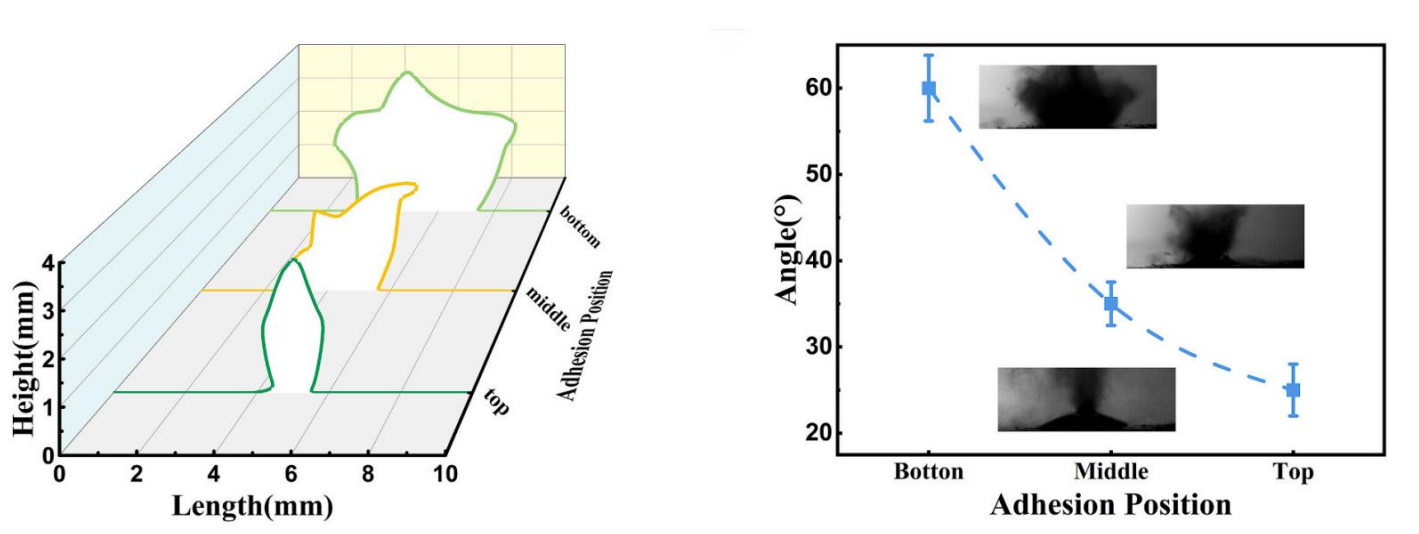
Image 4: Release patterns and angles of the fire extinguishing agent at different fixed positions (Fig. 4d/e from the original paper)
3.2 Sub-Millisecond Flame Extinction Timeline
To investigate the dynamic interaction between the microcapsule and the flame, high-speed photography recorded the process of a single microcapsule extinguishing a candle flame:
0 ms: The microcapsule is near the flame.
0.13 ms: The microcapsule shell ruptures; PMP is released as a high-speed jet.
0.26 ms: The fire-extinguishing agent continues to be released.
0.78 ms: The flame is completely extinguished.
3.1 to 4.7 ms: Residual smoke appears, and the combustion process ends.
As can be directly observed from high-speed photographic sequences, the critical process of microcapsules from shell rupture to flame extinguishing occurs at the submillisecond time scale.
This result shows that the SH3-108 high-speed camera can convert rapid fire extinguishing processes that are difficult to discern in traditional imaging into continuous time series, providing an experimental basis for analyzing the dynamic relationship between microcapsule rupture and flame suppression.
Image 5: Time-lapse sequence captured by a high-speed camera showing a single microcapsule extinguishing a candle flame (Fig. 5a from the original paper)
3.3 Performance Validation in Real-World Fire Scenarios
The microcapsules were integrated into flexible patches and tested in real-world scenarios:
n-Heptane Pool Fire Test: The flame under the patch was completely extinguished within 6 ± 0.5 s without reignition, whereas the control group continued to burn. A brief phenomenon of "flame intensification" lasting roughly 0.14 s was observed. The underlying physical mechanism involves the high-pressure PMP jet drawing in surrounding air, resulting in an instantaneous local oxygen supply, before the physical cooling and chemical suppression of the PMP completely extinguishes the flame. This defines the intensification as an aerodynamic effect, not a mechanism failure.
18650 Lithium-Ion Battery Thermal Runaway (Externally heated to 300°C): Thermal runaway in the patch-protected group was delayed by approximately 300 s. The peak temperature dropped from 550°C to 380°C (a decrease of approximately 170°C), and the battery structure remained intact. The control group battery experienced violent combustion and structural disintegration.
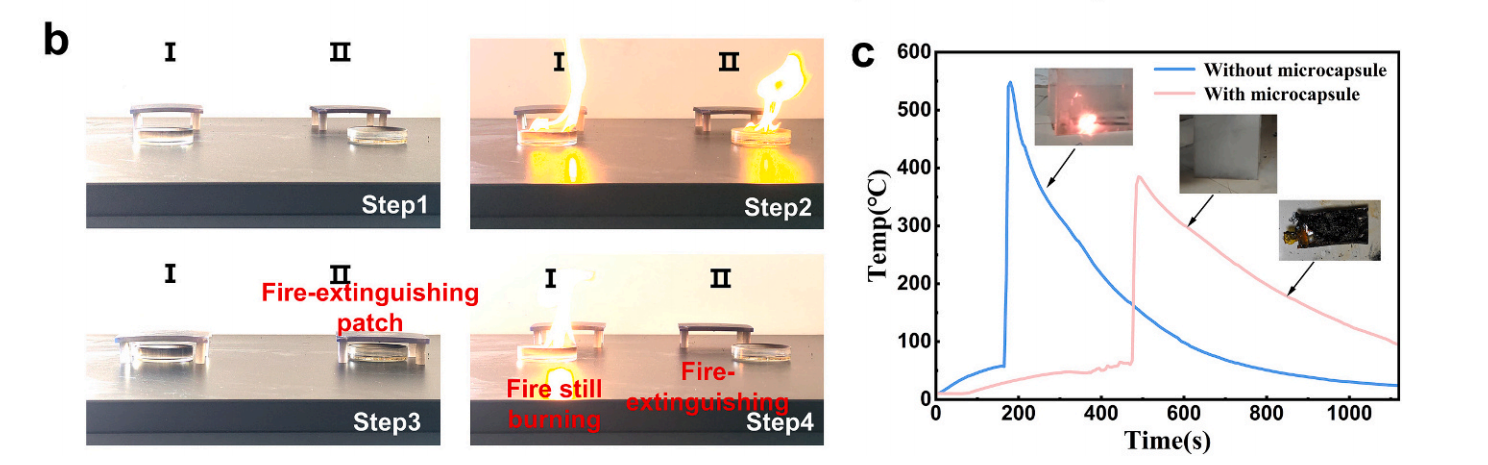
Image 6: Effectiveness of Fire-Extinguishing Patches in n-Heptane Tank Fire and Battery Thermal Runaway Experiments (Fig. 6 from the original paper)
4. Experimental Conclusions
By combining the SinceVision SH3-108 high-speed imaging system with image analysis, the study dynamically characterized the rapid fire suppression capabilities of PMP microcapsules:
Thermal Rupture and Release Mechanism: Upon heating, the microcapsule shell undergoes brittle fracture due to internal vapor pressure in approximately 0.13 ms. The PMP core ejects as a high-speed jet, expanding to a maximum coverage area of ~19 mm². The release angle is governed by fixed boundary conditions (ranging from ~25° to ~60°).
Rapid Fire-Extinguishing Performance: The time interval from shell rupture to complete flame extinction for a single microcapsule is approximately 0.78 ms, indicating that the fire-extinguishing action is completed within the sub-millisecond time scale.
Transient Phenomena and Suppression Mechanisms: Initial high-pressure jetting creates a brief (0.14 s) aerodynamic oxygen entrainment, followed immediately by physical cooling and chemical suppression. The patches effectively extinguished liquid pool fires within 6 seconds and significantly mitigated lithium-ion battery thermal runaway (delaying onset by 300 s and reducing peak temperatures by 170°C).
PMP microcapsules enable the rapid release and diffusion of fire extinguishing agents through thermally induced rupture, responding within the sub-millisecond range. High-speed imaging provides a critical visualization tool for these rapid dynamic experiments, shifting the research from simply "recording experimental phenomena" to quantitatively "analyzing transient processes."

Featured Camera

SH3-108
You can also read
How SinceVision High-Speed Cameras Power Electrospinning Research at Zhejiang Sci-Tech University (ZSTU)
Jul 01, 2026
SinceVision's New SD33-300 and SD33-600: Long-Range Laser Displacement Sensors for Wide-Span Precision Measurement
May 09, 2026
Research Published in Nature Communications: SinceVision Camera Validates New Neuromorphic Imaging Array
Apr 22, 2026
SinceVision and Lunitek Announce Partnership to Advance Scientific Discovery in Italy
Apr 21, 2026
SinceVision Launches New Back-Illuminated Cooled sCMOS Camera Series for Ultra-Low-Light Scientific Imaging
Nov 17, 2025



 Compare
 Clear the comparison bar
