










High-Speed Camera for Combustion Diagnostics: Boron-Based Energetic Materials Visualization (SH8 Series)
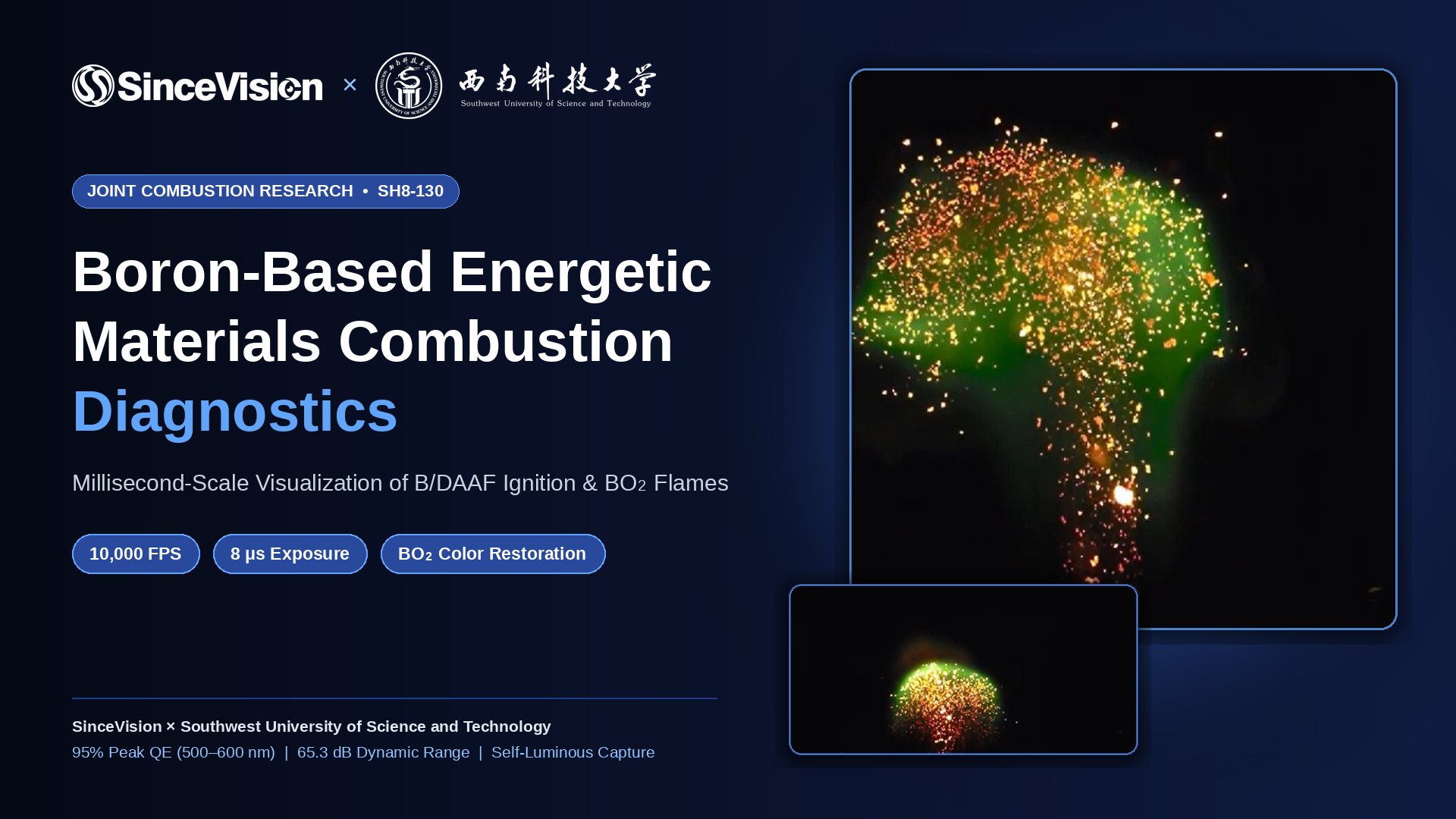
In collaboration with Southwest University of Science and Technology, the SinceVision SH8-130 high-speed camera captured laser-ignited boron/DAAF combustion at 10,000 fps and 8 μs exposure under self-luminous conditions. Combining 95% peak quantum efficiency (500–600 nm), 65.3 dB dynamic range, and a flame color restoration algorithm, the system prevents BO₂ green-channel saturation while preserving accurate ignition delay, micro-explosion, and particle ejection data.


Key Takeaways
In a joint research collaboration with Southwest University of Science and Technology, SinceVision deployed the SH8-130 high-speed camera (paired with a Zeiss 100mm lens) to capture laser-ignited combustion of boron/DAAF composite microspheres at 10,000 fps and an 8 μs exposure time. Supported by 95% peak quantum efficiency (500–600 nm), 65.3 dB dynamic range, and a dedicated flame color restoration algorithm, the system resolved ignition delay, micro-explosions, and BO₂ green flame decay without channel saturation.
1. Experimental Background: Boron Fuel Combustion Bottlenecks
Boron offers a gravimetric calorific value of up to 58.9 kJ/g, making it a premier high-energy metal fuel for advanced propulsion and energetic systems. However, a dense B₂O₃ oxide layer forms rapidly on boron particle surfaces, severely inhibiting ignition and lowering combustion efficiency. To overcome this bottleneck, formulation researchers test additives such as DAAF in B/DAAF composite microspheres using laser ignition paired with a high-speed camera for combustion observation.
Because ignition, flame evolution, particle ejection, and micro-explosions unfold within milliseconds, conventional observation methods can only record macroscopic outcomes and force researchers to rely on post-hoc speculation. Capturing quantitative, frame-by-frame evidence in this trial required solving four optical challenges:
Millisecond-Scale Transients: Ignition delay and micro-explosion events occur rapidly, requiring high-frame-rate capture to prevent losing critical structural and particle dispersion frames.
Intense BO₂ Green Light Interference: Boron oxidation radiates intense characteristic green BO₂ light (approximately 500–520 nm), which causes green-channel overexposure and obscures molten particle ejection paths.
Smoke and Soot Obscuration: Boron oxide smoke and soot scatter light and degrade image contrast, demanding high sensor dynamic range and tight exposure control.
True-Color Comparison Across Formulations: Higher DAAF additive content produces earlier and brighter green BO₂ emission, requiring accurate color reproduction to compare formulations objectively.
2. High-Speed Optical Setup and Parameter Configuration
To capture self-luminous combustion dynamics without external lighting, the joint research team positioned the SinceVision SH8-130 high-speed camera directly in front of the combustion apparatus, aiming a Zeiss 100mm lens at the laser ignition zone.
System Parameter | Experimental Configuration | Diagnostic Purpose |
|---|---|---|
High-Speed Camera | SinceVision SH8-130 (SH8 Series) | Captures millisecond combustion transients at high temporal resolution |
Optical Lens | Zeiss 100mm Lens | Resolves fine molten particle ejection within the ignition zone |
Illumination Mode | Self-luminous (no external light source) | Isolates true flame radiation and BO₂ spectral emission |
Spatial Resolution | 576 × 1024 pixels | Covers axial flame extension and radial particle dispersion |
Frame Rate | 10,000 fps | Records continuous sequences without losing micro-explosion frames |
Exposure Time | 8 μs | Freezes fast-moving particles and suppresses intense flame overexposure |
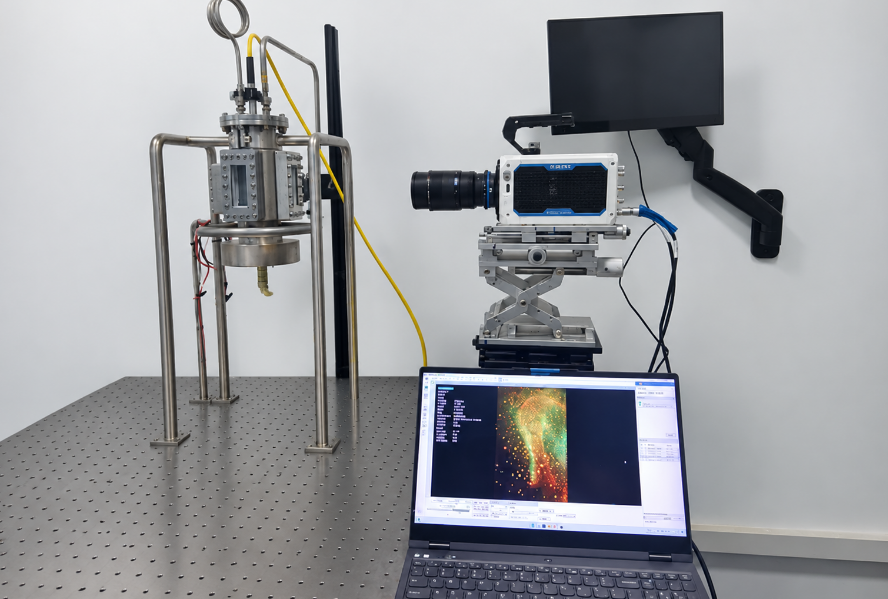
Image 1: Setup of SH8-130 high-speed camera for the research
3. Three-Stage Combustion Evolution of B/DAAF Microspheres
Continuous 10,000 fps imaging divided the laser-ignited combustion of B/DAAF composite microspheres into three measurable stages:
Stage 1: Initial Ignition (Characteristic Green BO₂ Emission)
Upon laser ignition, the sample instantaneously emits bright green light corresponding to characteristic BO₂ radical emission, marking the onset of boron oxidation. The abrupt rise in image brightness provides a clear, repeatable optical threshold for measuring ignition delay.
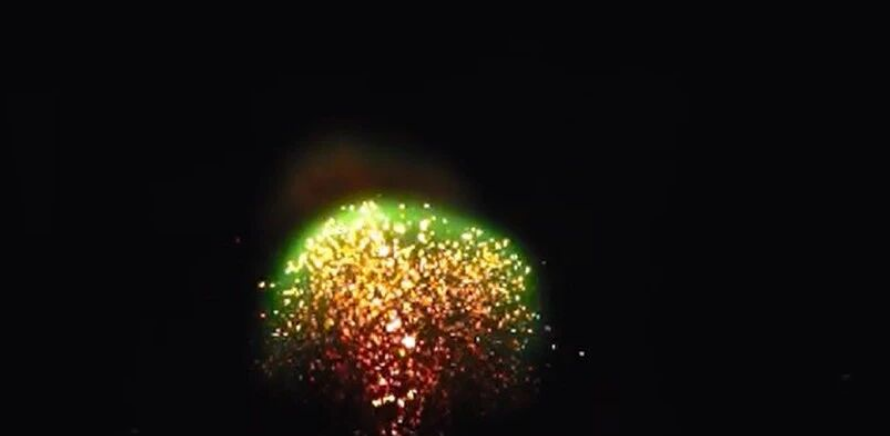
Image 2: Initial laser ignition of B/DAAF composite microspheres captured by the SinceVision SH8-130 high-speed camera at 10,000 fps (8 μs exposure), showing the onset of characteristic green BO2 radical emission.
Stage 2: Micro-Explosion and Molten Particle Ejection
DAAF decomposes rapidly and releases gas, triggering micro-explosions that disperse molten boron particles outward and suppress particle agglomeration. At an 8 μs exposure time, the high-speed camera froze transient particle trajectories, providing direct visual evidence of micro-explosion intensity and dispersion uniformity.
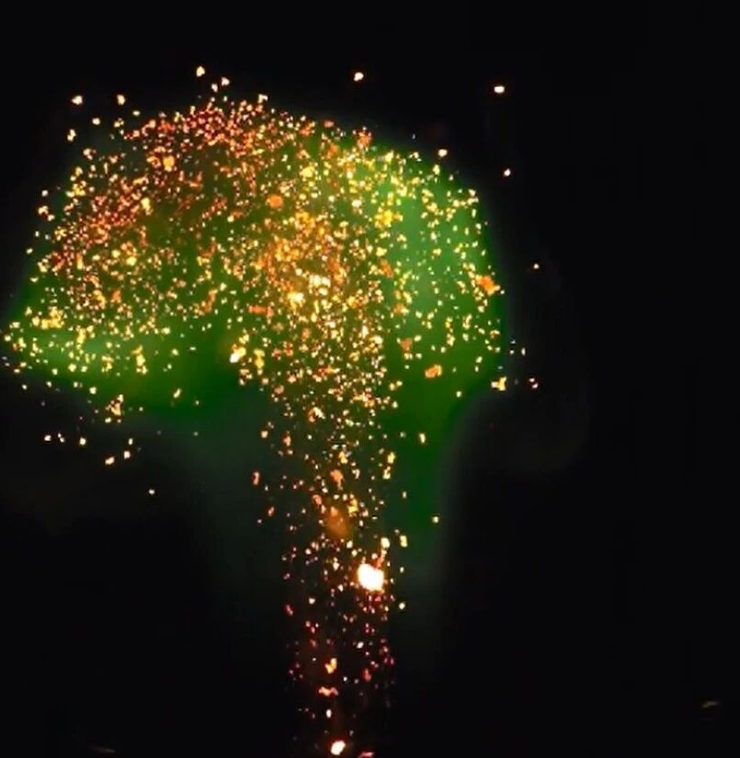
Image 3: Micro-explosion and outward ejection of molten boron particles triggered by DAAF decomposition, frozen without motion blur at 10,000 fps and 8 μs exposure.
Stage 3: Axial Flame Evolution and Decay Across Formulations
As the flame extends axially, high-speed sequences reveal clear formulation differences: samples with low DAAF content extinguish rapidly, while samples with higher DAAF content sustain brighter, longer-duration combustion.
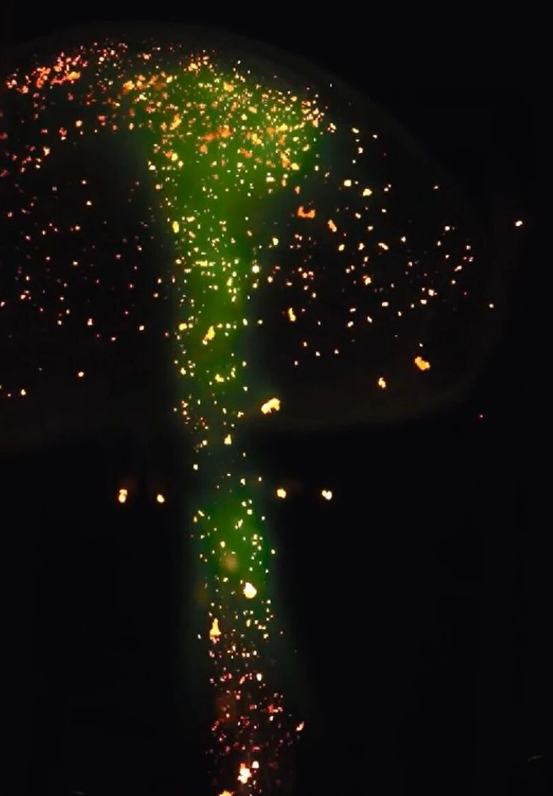
Image 4: Axial flame extension and decay across varying DAAF additive contents, with companion color restoration preserving true BO₂ green flame hue and saturation.
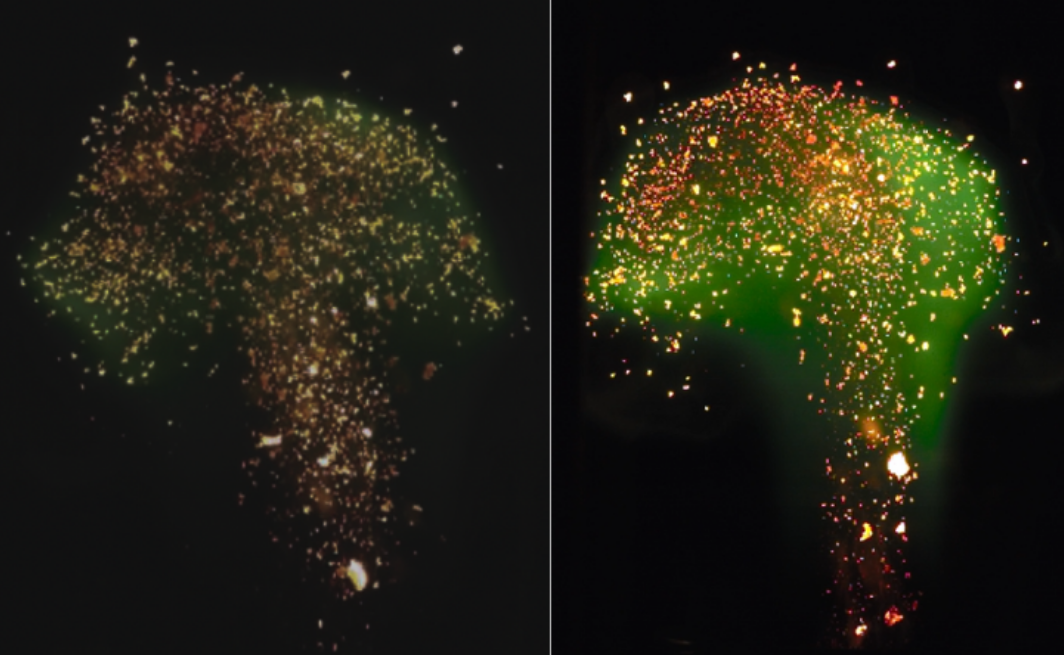
Image 5: (Left) Captured by a standard industrial camera | (Right) Captured by the SinceVision SH8-130 high-speed camera at 10,000 fps and 8 μs exposure
4. Solving Green-Channel Saturation with Color Restoration and Sensor Hardware
Intense BO₂ radiation easily drives standard sensors into green-channel saturation and color cast distortion, making cross-sample brightness comparisons unreliable. To convert raw combustion video into quantitative test data, SinceVision combined hardware-level sensor linearity with a dedicated combustion color restoration algorithm.
Targeted Flame Color Restoration
Working directly on preserved high-dynamic-range raw image data, the algorithm pairs the flame's spectral radiation profile with the camera's spectral response curve to reconstruct tonal levels and apply targeted white balance calibration in overexposed zones. Crucially, the pipeline adjusts only color channels without altering flame contours, particle trajectories, or frame timing, keeping ignition delay and burn duration measurements completely intact.
Sensor Performance Guarantee (SH8-130)
Sensor Performance Metric | Measured Specification | Role in Boron Combustion Diagnostics |
|---|---|---|
Peak Quantum Efficiency (500–600 nm) | ~95% | Matches the 500–520 nm BO₂ emission band for strong signal capture at 8 μs |
Temporal Dark Noise | ~9 e⁻ | Preserves weak particle ejection details inside dark, smoke-filled zones |
Dynamic Range | 65.3 dB | Captures bright flame cores and dim ejected droplets in the same frame |
Average Linearity Deviation | 0.148% | Ensures grayscale changes correspond reliably to true radiation intensity |
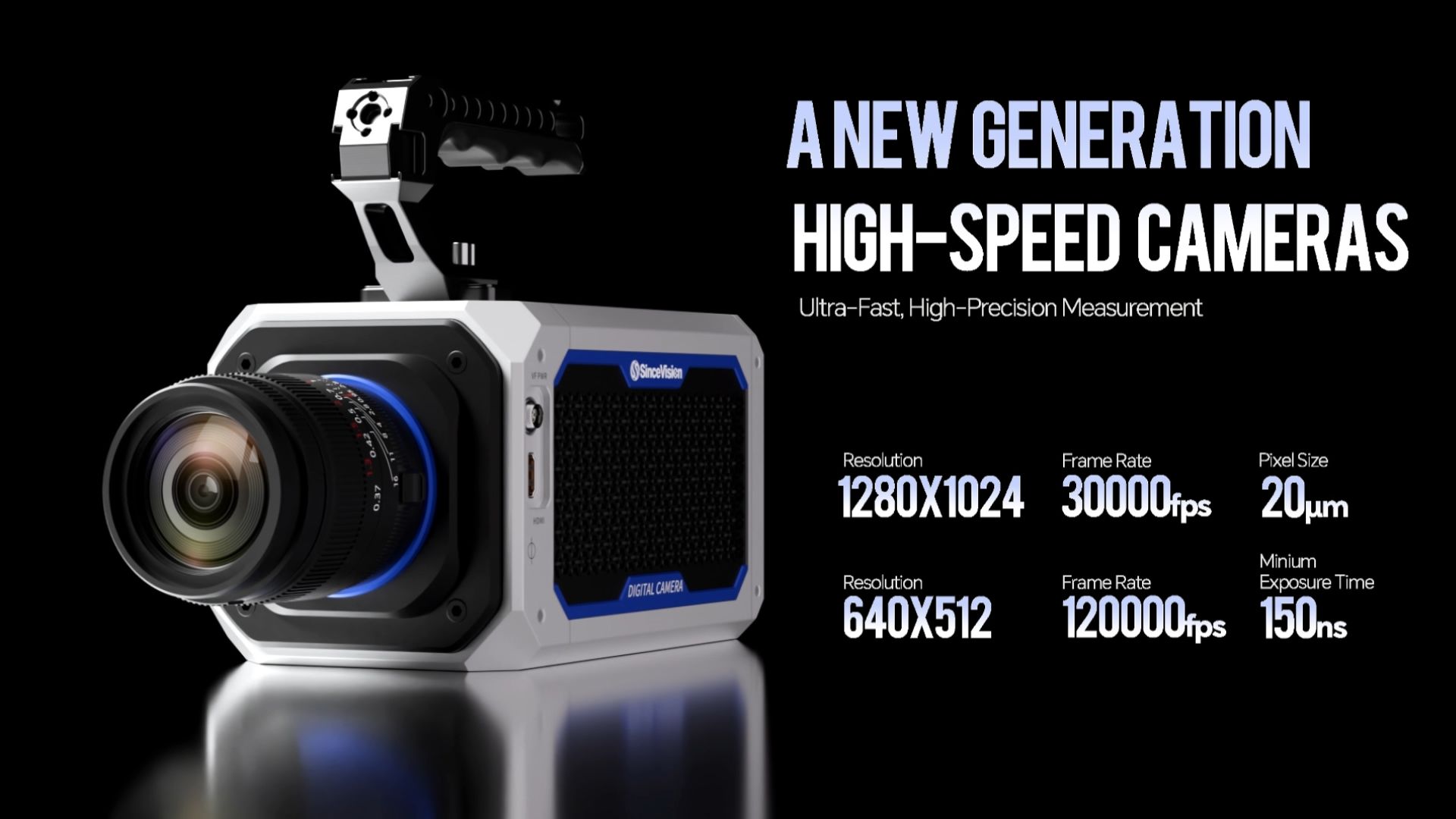
Image 6: The SinceVision SH8-130 high-speed camera, delivering ~95% peak quantum efficiency (500–600 nm) and 65.3 dB dynamic range for self-luminous combustion diagnostics.
For another extreme-pressure reacting flow example, see how the SH8 Series performed in constant-volume flame cellularization imaging.
5. Methodological Value and Broader Energetic Applications
This collaborative trial with Southwest University of Science and Technology validated two core capabilities of the SinceVision SH8-130 high-speed camera for combustion research:
Complete Quantitative Transient Extraction: Continuous 10,000 fps sequences capture laser ignition, micro-explosions, particle dispersion, and flame decay without blind spots, enabling direct extraction of ignition delay and burn duration.
Simultaneous Detail and True-Color Analysis: Combining 65.3 dB dynamic range and 0.148% linearity with spectral color restoration eliminates green-channel clipping while preserving true-to-life emerald-green BO₂ flame comparisons.
Beyond boron composite fuels, this high-speed imaging methodology directly supports solid propellant combustion, powder fuel injection, thermal explosion testing, and transient multiphase fluid dynamics.
To evaluate the SH8 Series high-speed camera for your laboratory's combustion test rig, contact the SinceVision engineering team to request sample footage or schedule a technical consultation.
6. Frequently Asked Questions (FAQ)
What frame rate and exposure time are needed for boron-based energetic material combustion?
In laser-ignited boron/DAAF microsphere trials, recording at 10,000 fps with an 8 μs exposure time provides enough temporal density to capture ignition onset, freeze molten particle ejection during micro-explosions, and track axial flame decay without motion blur.
Why does boron combustion produce an intense green flame?
During oxidation, boron reacts to emit characteristic BO2 radical radiation concentrated in the 500–520 nm green spectral band. Higher DAAF additive levels accelerate reaction intensity and brighten this emission, which requires high dynamic range and color calibration to avoid sensor saturation.
How does the SinceVision SH8-130 prevent overexposure without altering quantitative data?
The camera pairs a 65.3 dB dynamic range and 0.148% linearity deviation with a color restoration algorithm that reconstructs overexposed tonal regions using the flame's spectral characteristics. Because the algorithm adjusts only color channels, flame geometry, particle trajectories, and timing metrics remain unaltered.
Can a high-speed camera image self-luminous combustion without external lighting?
Yes. With ~95% peak quantum efficiency in the 500–600 nm band and low ~9 e⁻ temporal dark noise, the SH8-130 captures clear self-luminous flame emission and ejected particles at 8 μs exposures without external illumination.
Featured Camera
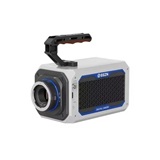
SH8-130
You can also read
High-Speed Camera for Combustion Diagnostics: Boron-Based Energetic Materials Visualization (SH8 Series)
Nov 25, 2026
Non-Contact Wafer Metrology in Semiconductor Manufacturing: Optical Principles and Tolerances
Nov 18, 2026
High-Speed Imaging: Engineering Principles, Optical Trade-Offs, and R&D Applications
Nov 12, 2026
Laser Triangulation Solves New 3D Inspection Demands in AI Computing Era
Nov 10, 2026
How 3D Line Laser Profilers Solve Critical Challenges in Automotive Tire Manufacturing
Nov 09, 2026



 Compare
 Clear the comparison bar

