










SinceVision at APS Division of Fluid Dynamics 2026: High-Speed Imaging for Microfluidics, Multiphase Flow, and Atomization (Booth No. 504)
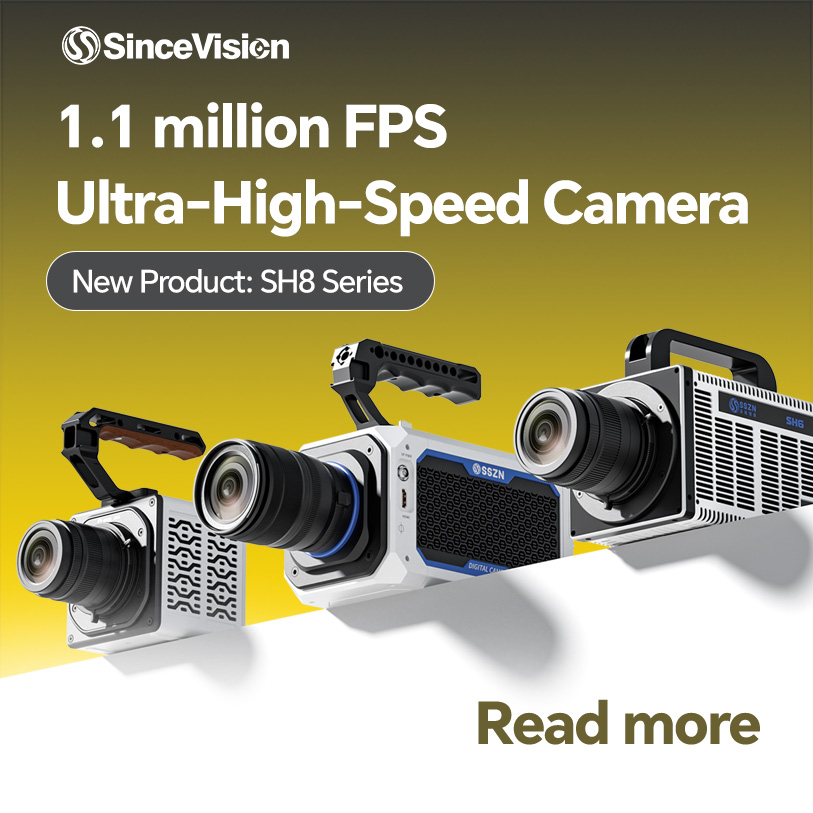
SinceVision is exhibiting its SH3, SH6, and SH8 (SH8-130) high-speed cameras at Booth No. 504 during the 79th APS Division of Fluid Dynamics Annual Meeting in Orlando, Florida (November 22–24, 2026), showcasing high-speed backlighting for six-stage jet breakup and atomization alongside microfluidic flow visualization, multiphase microfluidics, and cell sorting diagnostics.
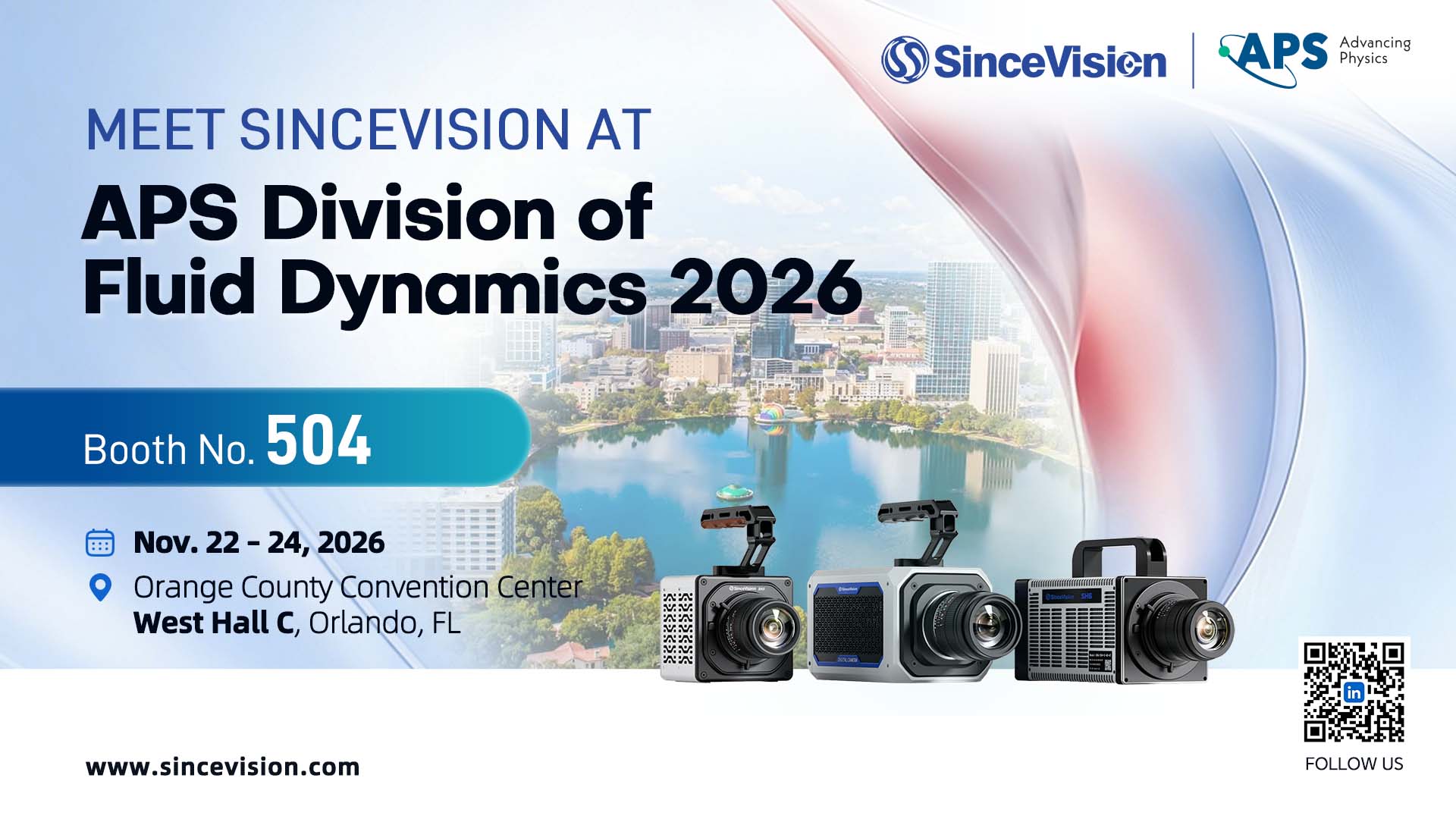


SinceVision is exhibiting at the 79th Annual Meeting of the APS Division of Fluid Dynamics (APS DFD 2026) from November 22–24, 2026, at Booth No. 504 in the Orange County Convention Center West Hall C in Orlando, Florida. Visit our engineering team to evaluate the SH3 Series, SH6 Series, and SH8 Series high-speed cameras (including the SH8-130) for microfluidic flow visualization, multiphase microfluidics, and jet breakup diagnostics.
| Event Detail | Information |
Event | 79th Annual Meeting of the APS Division of Fluid Dynamics (APS DFD 2026) |
Dates | November 22–24, 2026 |
Location | Orange County Convention Center, West Hall C, Orlando, Florida, USA |
Booth Number | Booth No. 504 (SinceVision) |
Featured Systems | SH3 Series, SH6 Series, and SH8 Series (including SH8-130M) |
Booking Link |
About APS Division of Fluid Dynamics 2026 in Orlando, Florida
The APS Division of Fluid Dynamics annual meeting is the premier fluid dynamics conference in the USA, bringing together more than 3,000 physicists, researchers, and students across academia, industry, and major national laboratories. The APS DFD Orlando Florida program is supported by a Local Organizing Committee led by the University of Florida, alongside faculty and researchers from Florida State University, the University of Central Florida, the University of South Florida, Embry-Riddle Aeronautical University, and Florida Atlantic University.
Modern experimental fluid mechanics relies on quantitative high-speed imaging to bridge numerical simulations and physical benchtop measurements. Whether validating multiphase models, tracking cavitation bubble collapse, or resolving turbulent boundary layers, researchers require precise frame rates and sub-microsecond exposure control. SinceVision partners with university laboratories, aerospace groups, and energy researchers across the United States to deliver repeatable optical diagnostics for demanding fluid phenomena.
Applications of Fluid Dynamics Using High-Speed Imaging
Experimental applications of fluid dynamics span orders of magnitude in both length scale and velocity. Selecting a high-speed camera requires balancing spatial resolution against temporal sampling rate so that droplet displacement, channel wall shear, and interface deformation remain sharp between consecutive frames.
| Fluid Dynamics Application | Resolution & Frame Rate | Key Phenomena Resolved |
Microfluidic Flow Visualization | 1920×1080 @ 3,000 fps | Laminar stream mixing, vortex shedding, and channel wall boundary behavior |
Multiphase Microfluidics | 1280×1024 @ 2,000 fps | Immiscible interface formation, slug flow, and droplet pinch-off dynamics |
Microfluidic Cell Sorting | 1280×1024 @ 9,000 fps | High-throughput cell trajectory tracking, acoustic/dielectrophoretic deflection |
Jet Breakup & Atomization | 1280×1024 @ 10,000 fps | Ligament stretching, necking, primary droplet formation, and secondary breakup |
Case Study Spotlight: Jet Breakup and Atomization Imaging (SH8-130)
Jet breakup and atomization imaging provides essential design data for combustion injectors, aerospace propulsion, inkjet printing, spray cooling, biomedical engineering, and industrial coating. In the near-field region of a nozzle outlet, liquid sheets and cylindrical jets transition into fine sprays over microsecond timescales, making motion blur a primary obstacle for conventional sensors.
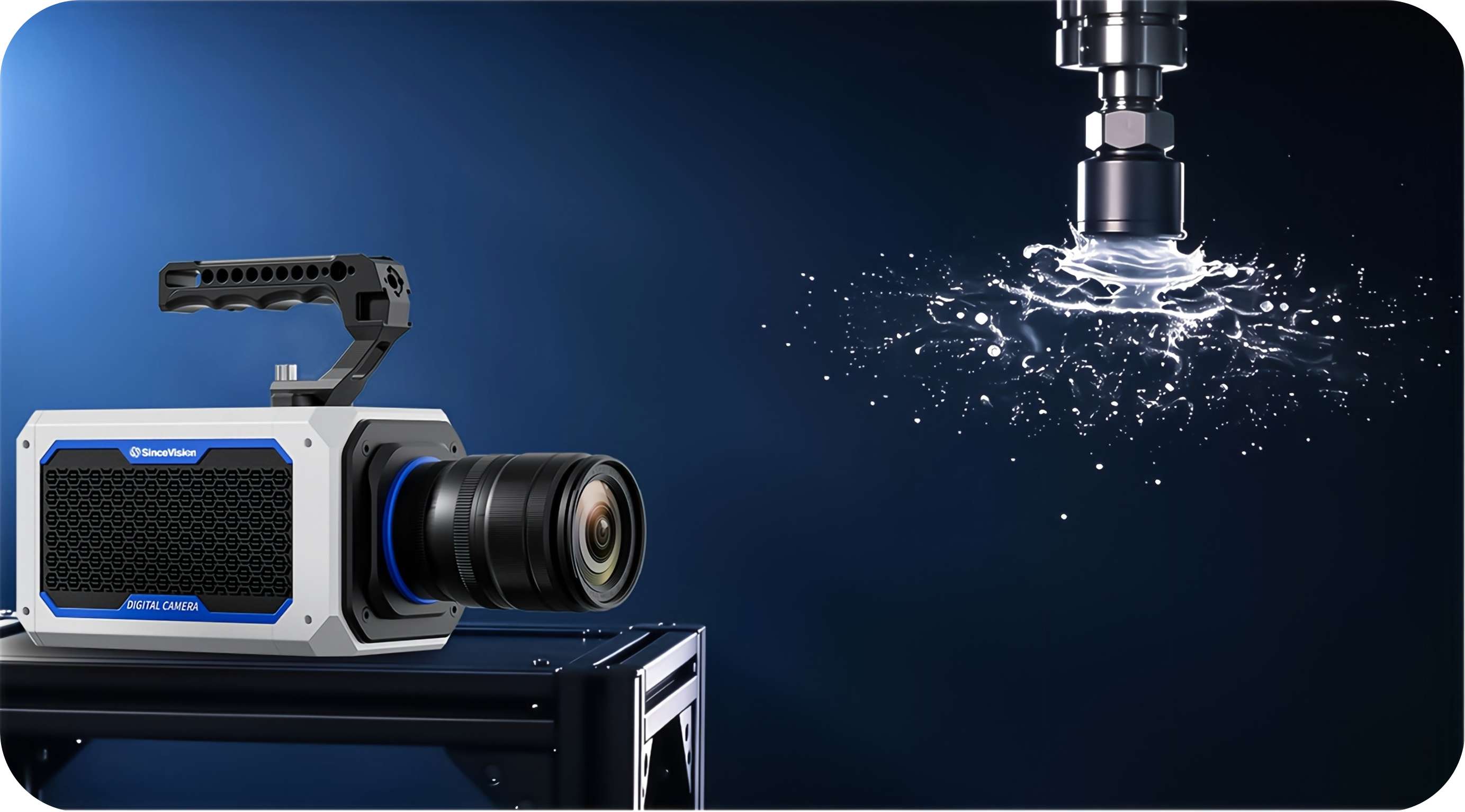
Image: High-Speed Camera Setup for Jet Breakup and Atomization Imaging
In our laboratory setup, the SinceVision SH8-130 high-speed camera is paired with a back-illuminated LED panel light source in a high-speed backlighting imaging (shadowgraphy) configuration. Focusing directly on the near-field liquid jet at the nozzle outlet, uniform backlighting maximizes edge contrast along the gas-liquid interface while mitigating photon starvation at short exposure times.
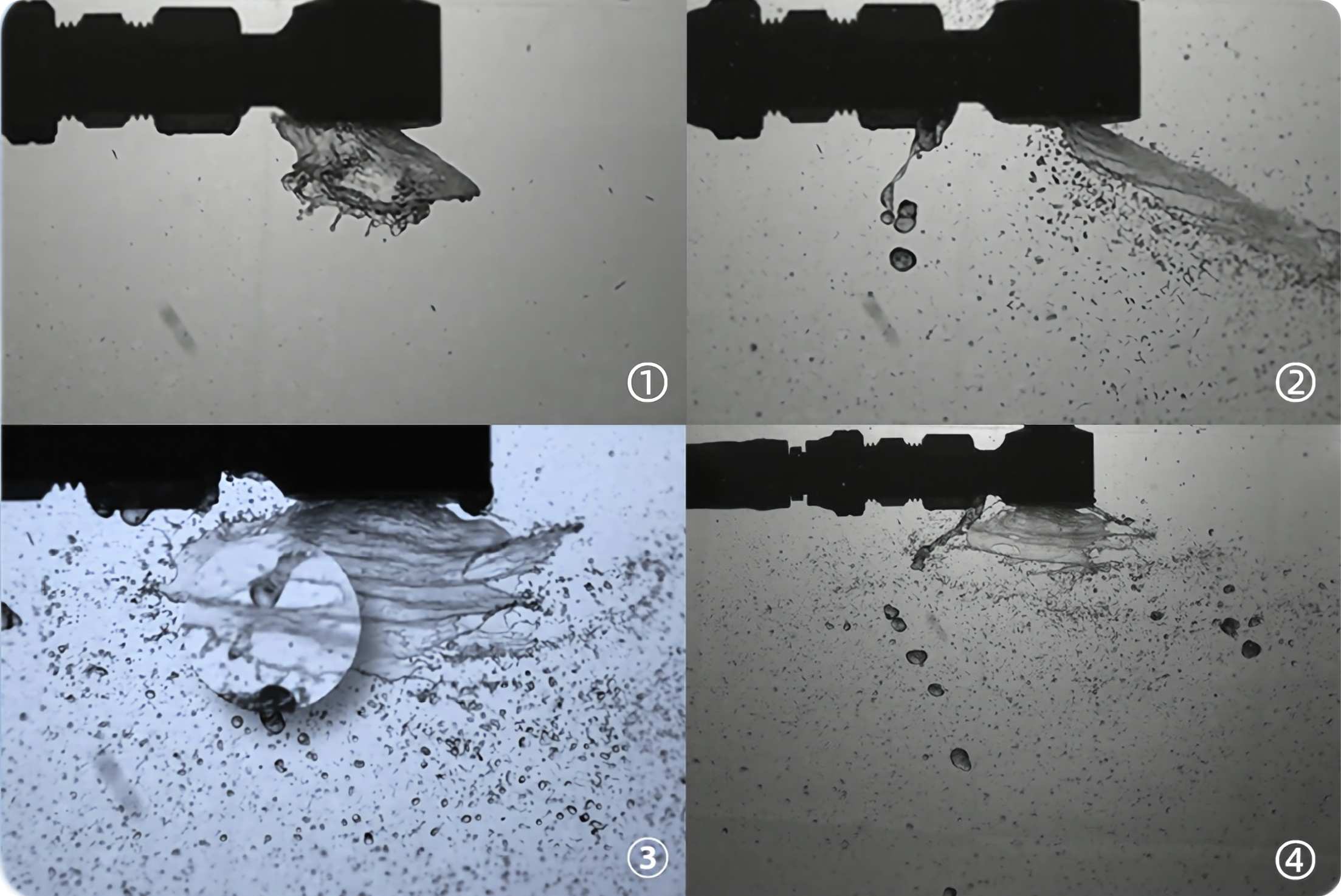
Image: Jet Breakup and Atomization Imaging Captured by SinceVision SH8-130 High-Speed Camera
Using this optical arrangement at 1280×1024 @ 10,000 fps, the SH8-130 resolves all six physical stages of atomization without motion blur:
Jet formation: Initial cylindrical or sheet extrusion emerging from the nozzle orifice under prescribed Weber number conditions.
Ligament stretching: Aerodynamic shear forces and surface tension instabilities elongating fluid structures into thin filaments.
Necking and breakup: Localized capillary thinning where Rayleigh-Plateau instabilities pinch off continuous liquid threads.
Primary droplet formation: Separation of large, asymmetric fluid parcels immediately downstream of the intact core.
Secondary breakup: Further aerodynamic fragmentation of unstable primary droplets into finer satellite distributions.
Full spray formation: Spatial dispersion of the developed droplet cloud for downstream size and velocity distribution analysis.
Microsecond temporal resolution freezes transient ligament breakup cleanly, allowing researchers to measure intact core length, breakup frequency, and droplet and fluid mechanics parameters directly from raw image sequences.
Microfluidic Flow Visualization, Multiphase Systems, and Cell Sorting
Inside lab-on-a-chip devices, channel diameters typically range from tens to hundreds of micrometers, demanding high pixel density alongside kHz-class acquisition speeds:
Microfluidic flow visualization (1920×1080 @ 3,000 fps): Full HD resolution captures wide channel networks simultaneously, enabling researchers to track tracer particles, mixing gradients, and thin-film and material stretching interfaces across junctions.
Multiphase microfluidics (1280×1024 @ 2,000 fps): Balanced spatial framing resolves gas-liquid and liquid-liquid meniscus curvature, Taylor bubble length, and coalescence events during continuous multiphase runs.
Microfluidic cell sorting (1280×1024 @ 9,000 fps): Elevated frame rates at megapixel ROI resolution capture fast-moving biological cells passing through sorting bifurcations, providing reliable optical validation for automated sorting triggers and high-speed robotics actuation studies.
What to Experience at Booth No. 504: SH3, SH6, and SH8 Series
At Booth 504 SinceVision, our applications engineers will demonstrate the SH3 Series, SH6 Series, and SH8 Series high-speed cameras live on the exhibition floor. Rather than evaluating datasheets in isolation, visitors can inspect raw capture sequences and discuss optical coupling strategies tailored to their specific test rigs.
Each performance benchmark in our lineup addresses a recurring experimental bottleneck in microsecond fluid dynamics:
1,150,000 fps maximum frame rate: Captures ultra-fast phenomena such as shock-droplet interactions, spark-induced cavitation bubble collapse, and cavitation and spray diagnostics where sub-millisecond events unfold in microseconds.
100 ns minimum exposure time: Eliminates motion blur on supersonic jets and high-velocity spray plumes. Because a 100 ns exposure time severely limits photon collection, pairing high-sensitivity CMOS sensors with uniform LED backlighting is critical to maintaining usable signal-to-noise ratios.
5120×4096 @ 1,000 fps high-resolution mode: Delivers 20-megapixel framing for wide-field Particle Image Velocimetry (PIV), full-cone spray angle characterization, and coupled fluid-structure interaction studies using Digital Image Correlation (DIC).
Up to 24 TB optional internal memory: Solves the data-burst bottleneck during long-duration multiphase experiments and stochastic cavitation runs, allowing researchers to record extended continuous sequences without dropping frames before offloading to workstation storage.
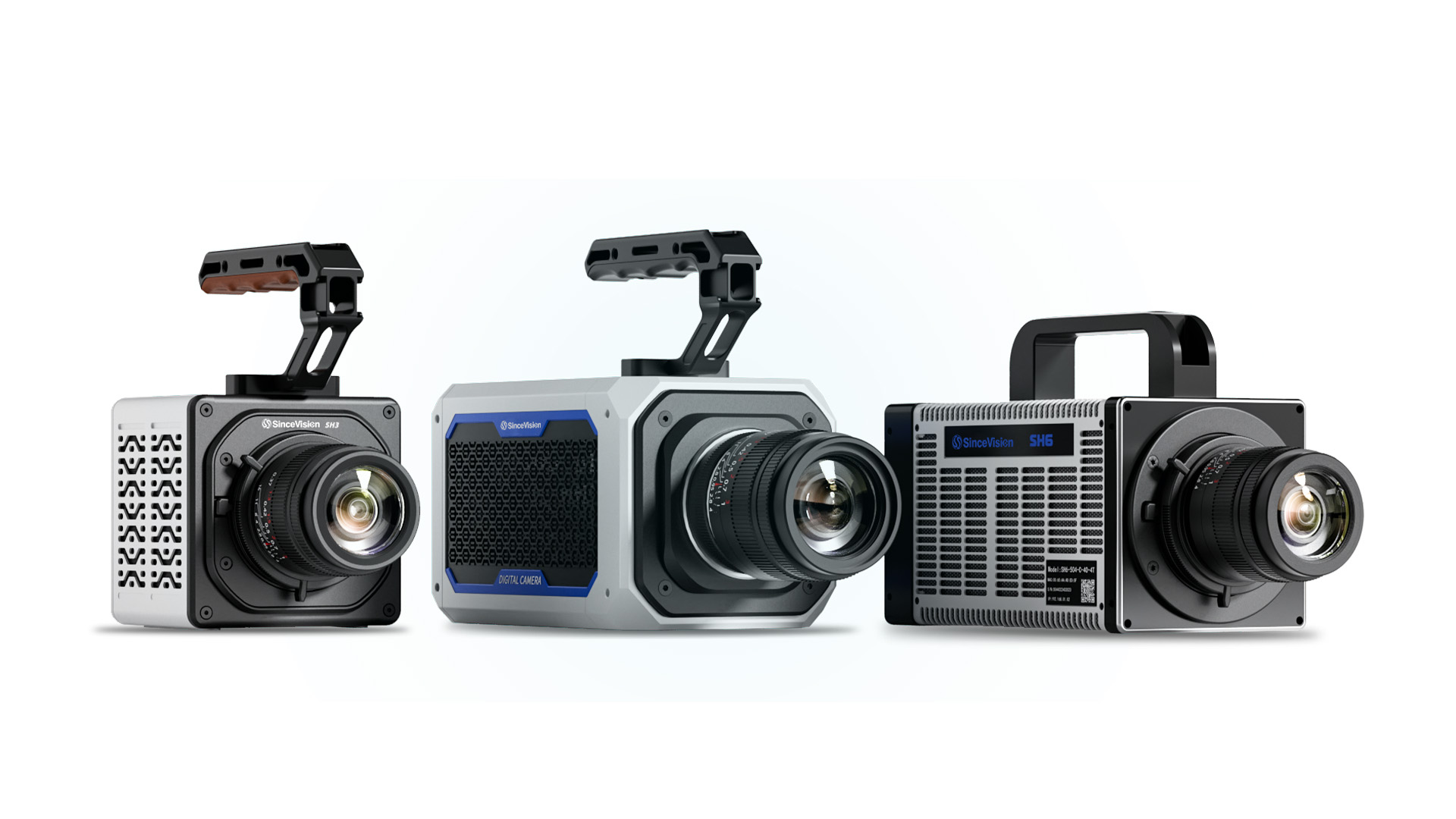
Image: SinceVison's SH3, SH6, and SH8 Series product lineup
Schedule a Live Demo or Technical Consultation
Whether you are specifying a new laboratory imaging rig, troubleshooting photon starvation in shadowgraphy, or upgrading an existing PIV system, we invite you to visit Booth No. 504 in Orange County Convention Center West Hall C during APS DFD 2026.
To reserve dedicated time with a SinceVision applications engineer, book a 1-on-1 booth meeting or live demo in advance. You can also email your optical setup requirements, nozzle geometries, or sample test challenges directly to info@sincevision.com so our team can prepare relevant capture benchmarks for your visit.
Frequently Asked Questions (FAQ)
When and where is the APS Division of Fluid Dynamics 2026 meeting taking place, and where is SinceVision located?
The 79th Annual Meeting of the APS Division of Fluid Dynamics runs from November 22–24, 2026, at the Orange County Convention Center, West Hall C, in Orlando, Florida, USA. You can find SinceVision at Booth No. 504 throughout the exhibition.
Which high-speed camera specifications are best for jet breakup and atomization studies?
For near-field jet breakup and atomization, prioritize a global-shutter sensor capable of 10,000 fps or higher at megapixel resolution (such as 1280×1024 @ 10,000 fps on the SH8-130M) combined with a short minimum exposure down to 100 ns to freeze ligament necking. Pairing the camera with a uniform, back-illuminated LED panel light source ensures crisp droplet boundaries without motion blur.
What frame rates and resolutions are used for microfluidic flow visualization and cell sorting?
For general microfluidic flow visualization, 1920×1080 @ 3,000 fps provides wide channel coverage for laminar mixing and tracer tracking, while multiphase microfluidics typically operates well at 1280×1024 @ 2,000 fps. Higher-velocity microfluidic cell sorting requires faster temporal sampling, such as 1280×1024 @ 9,000 fps, to resolve individual cell trajectories through sorting junctions.
How can researchers schedule a one-on-one high-speed camera demo at APS DFD 2026?
Researchers can book a private consultation or hands-on camera evaluation at Booth No. 504 through the SinceVision contact page. For pre-conference technical questions or custom optical configuration requests, email info@sincevision.com.
Featured Cameras
SH3-105
SH6-501
SH8-130



 Compare
 Clear the comparison bar

