










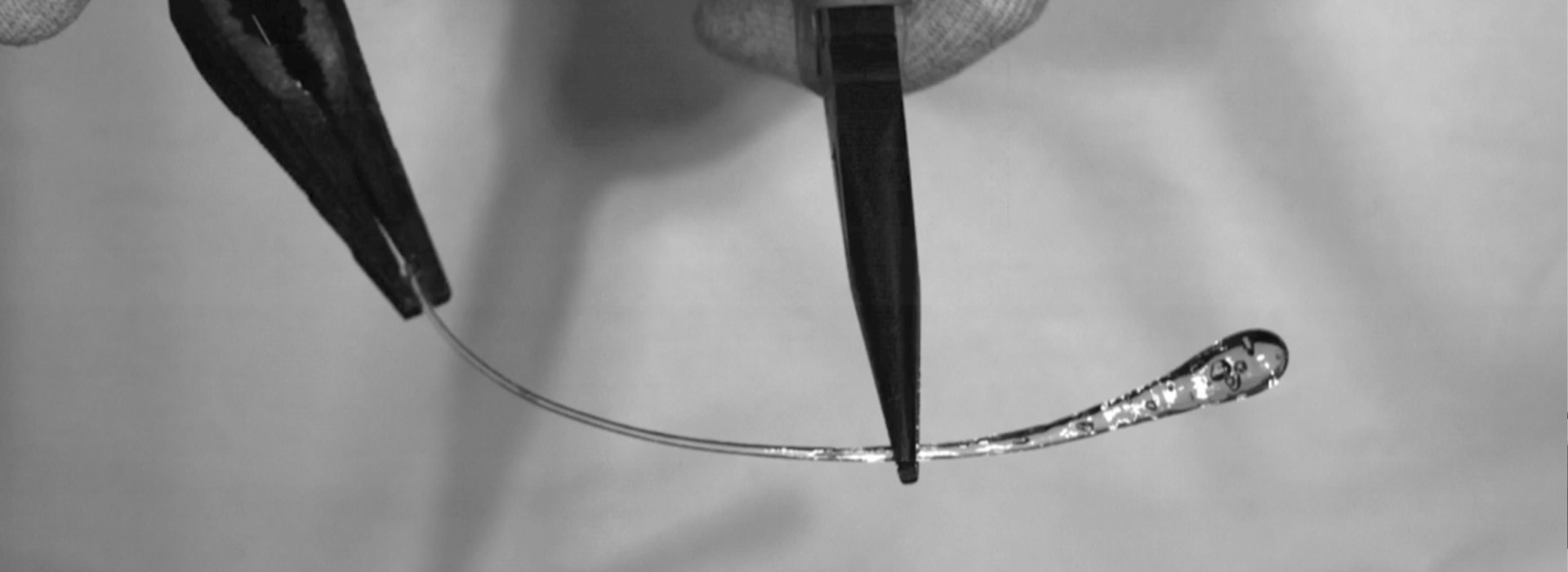
Observation of Prince Rupert's Drop Shattering
Researchers utilize SinceVision high-speed cameras to visualize the rapid crack propagation and extreme stress release mechanisms during the shattering of a Prince Rupert's Drop. By recording the instantaneous fracture path and velocity, this high-speed imaging provides quantifiable experimental evidence for advanced materials science and fracture mechanics studies.
 Product Inquiry
Related tags
Prince Rupert's Drop represents a unique material phenomenon that demonstrates the behavior of glass under extreme internal stress. Studying the fracture mechanics of this structure provides materials scientists with critical experimental data regarding internal stress distribution and material evolution under external force.
The Physics of the Shattering Process
The rupture of a Prince Rupert's Drop is an exceptionally rapid physical event. When minor mechanical pressure is applied to the fragile tail, massive stored residual stress is released instantaneously. This triggers crack propagation throughout the bulbous head at astonishing speeds, resulting in complete structural disintegration.
Capturing Transient Stress Release with SinceVision High-Speed Camera
Because this phenomenon occurs in a fraction of a millisecond, conventional observation is impossible. SinceVision high-speed cameras provide the exact temporal resolution required to capture the moment of failure.
By utilizing ultra-high frame rates, researchers can continuously record:
The initial formation of the micro-crack at the tail.
The precise geometric propagation path of the fracture.
The terminal shattering phase of the bulbous head.
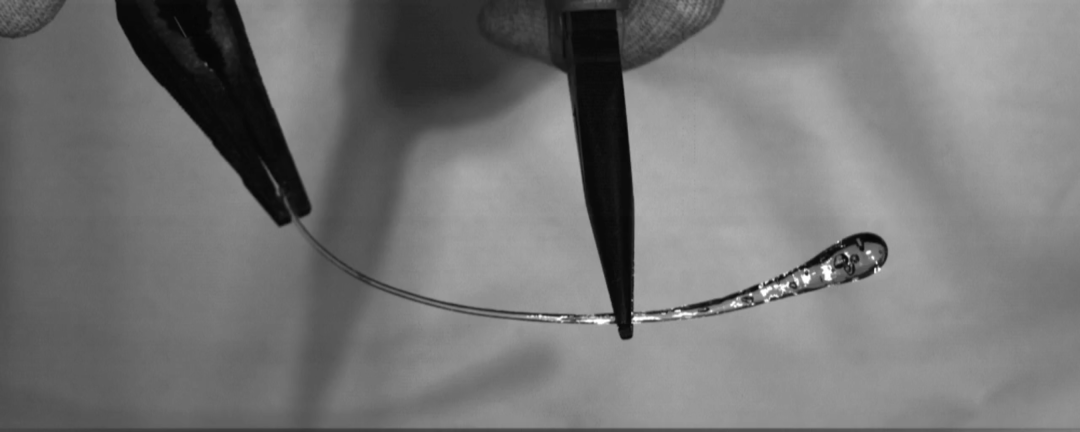
Image: Observation of Prince Rupert's Drop Shattering Experiment
This continuous high-speed image sequence allows scientists to directly calculate crack propagation velocity and observe the rapid release of extreme kinetic energy. Through high-speed visual data, theoretical assumptions in fracture mechanics can be verified with direct dynamic experimental evidence.






 Compare
 Clear the comparison bar

