










Accurate Quartz Boat Position Detection in Photovoltaic Furnace Lines | SinceVision SD-C400 Displacement Sensor
Laser displacement sensor for quartz boat position detection and graphite boat positioning in photovoltaic furnaces. Cost-effective, non-contact, industrial grade.


Introduction: Positioning as a Hidden Constraint in PV Production
In photovoltaic manufacturing, the diffusion and oxidation stages remain among the most demanding processes on the production floor. Quartz and graphite boats carry hundreds of silicon wafers through high-temperature furnaces, where process stability directly affects cell efficiency and yield. While much attention is paid to furnace temperature profiles and gas flow control. However, one requirement often determines whether downstream automation succeeds or fails: accurate boat position detection.
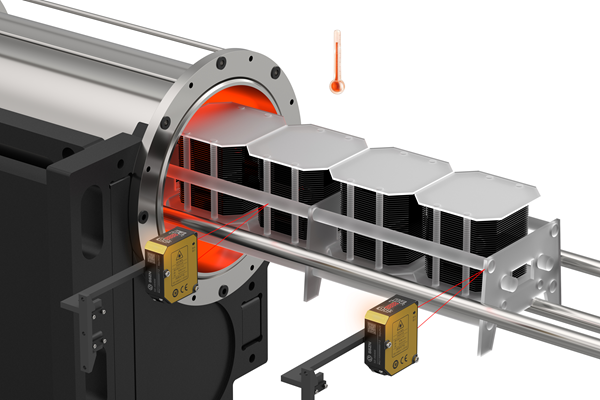
As quartz boats exit the furnace, often at elevated temperatures and under strict cycle-time constraints, robotic handling systems must locate, grip, and transfer them without delay or error. A positional deviation of even a few millimeters can result in wafer slippage, mechanical interference, or unplanned line stoppages. For equipment manufacturers and system integrators, this makes graphite boat positioning and quartz boat position detection a foundational, not peripheral, engineering problem.
Laser displacement sensors are increasingly becoming the preferred solution for this task. Their non-contact nature, fast response, and adaptability to different surface conditions align well with the realities of photovoltaic production environments. Among these, cost-effective sensor platforms are now closing the gap with traditionally premium solutions, reshaping how positioning systems are specified.
The Industry Challenge: Measuring What Is Difficult to See
Quartz and graphite boats present a unique optical challenge. Quartz surfaces are often frosted or semi-translucent, scattering incident light rather than reflecting it cleanly. Graphite boats, by contrast, exhibit low reflectivity and surface texture variations resulting from repeated thermal cycling. Both materials are exposed to elevated ambient temperatures near furnace exits, often in confined mechanical layouts.
Traditional contact-based sensors struggle in this context. Mechanical probes introduce wear, require frequent recalibration, and risk contamination. Vision systems depend heavily on lighting stability and surface contrast, which are difficult to maintain around furnace mouths. For system integrators designing automated transfer systems, these limitations increase commissioning time and long-term maintenance cost.
Laser displacement sensors address these issues by directly measuring distance without physical contact. However, not all laser sensors are suited to photovoltaic environments. To be viable, a sensor must maintain stable output on translucent quartz, resist thermal drift, and integrate easily with existing PLC and motion control systems.
Measurement Requirements for Quartz and Graphite Boat Positioning
In practical terms, positioning accuracy requirements for quartz and graphite boats are moderate but non-negotiable. Most robotic handling systems require repeatable detection within sub-millimeter tolerances to ensure safe gripping and alignment.
Typical requirements include:
1. Positioning accuracy: up to 0.5 mm
2. Stable detection on frosted or translucent surfaces
3. Reliable operation at ambient temperatures up to 85°C
4. Fast response to support continuous furnace throughput
5. Compact form factor for tight installation spaces
Meeting these requirements consistently across multiple production lines is where sensor selection becomes a strategic decision rather than a component-level choice.
SinceVision’s Approach: SD-C400 Laser Displacement Sensor
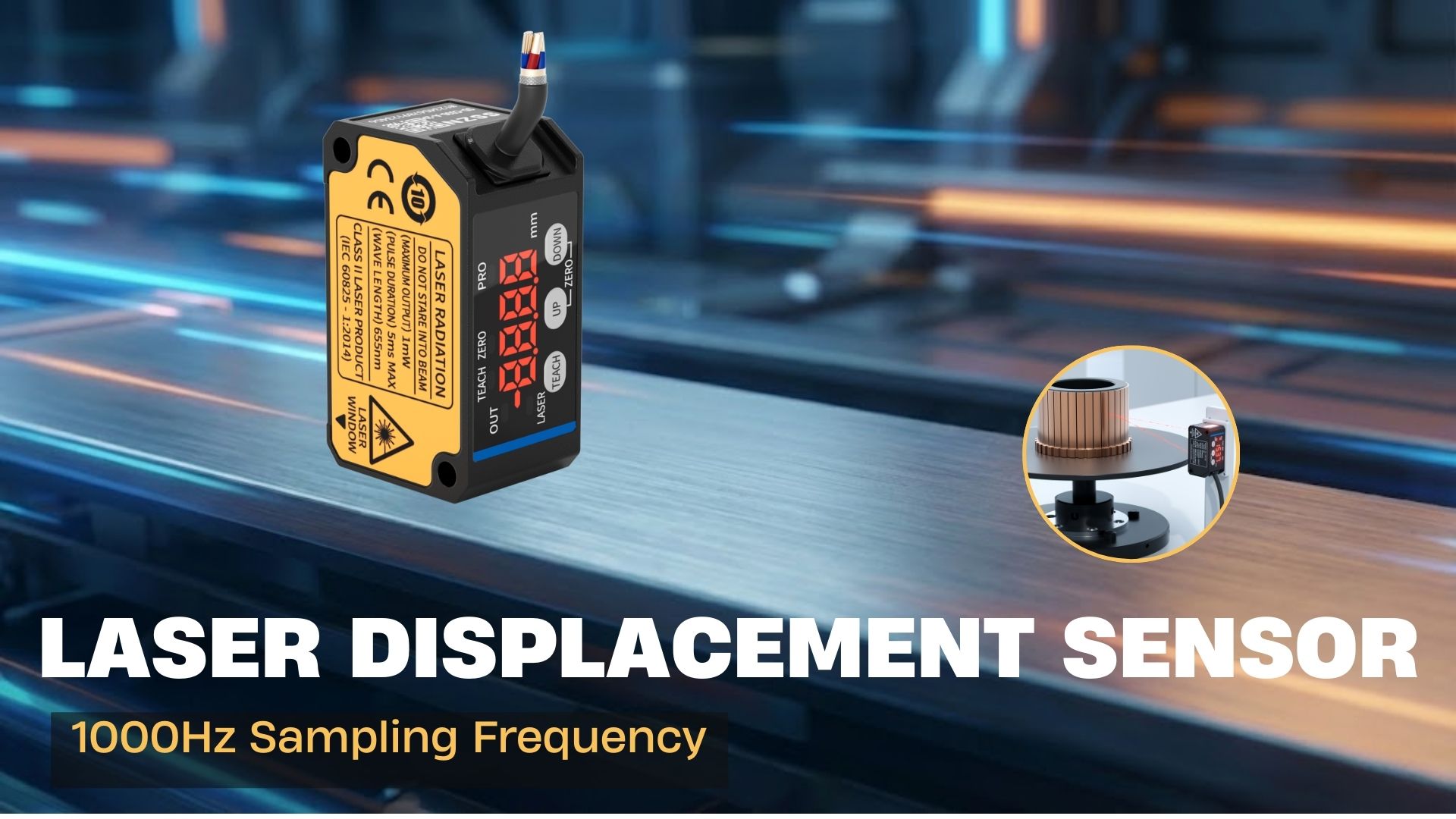
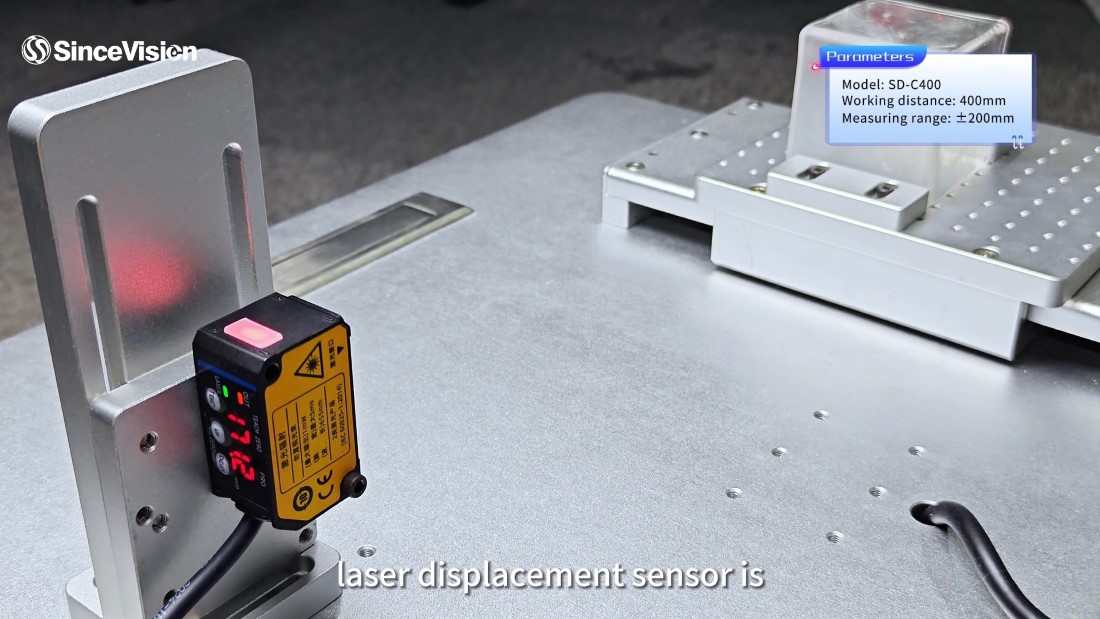
The SD-C400 laser displacement sensor represents SinceVision’s response to these photovoltaic-specific challenges. Designed as part of the SD-C Series, it emphasizes measurement stability and integration simplicity while maintaining a cost structure that appeals to equipment builders and integrators working under tight budget constraints.
The SD-C400 delivers reliable quartz and graphite boat position detection through a combination of optical stability and mechanical robustness. Its ability to operate on frosted quartz surfaces is particularly relevant in diffusion and oxidation processes, where surface finish cannot be controlled for measurement convenience.
Key technical characteristics include:
a. Linear precision up to 0.01 mm
b. Linearity of ±0.1% F.S.
c. Positioning accuracy suitable for 0.5 mm handling tolerances
d. Sampling rate up to 1 kHz for real-time response
These specifications align closely with the actual demands of furnace exit handling, avoiding over-specification while maintaining process reliability.
Compact Design and Integration Advantages
Space constraints are a recurring issue in photovoltaic equipment design. Furnace exit areas are densely packed with shielding, conveyors, and robotic interfaces. Sensors must fit into these environments without requiring extensive mechanical redesign.
With dimensions of 44.4 × 25 × 20 mm, the SD-C400 supports compact installation and retrofit projects. For system integrators, this reduces mechanical engineering effort and shortens deployment timelines. Its lightweight construction also minimizes stress on mounting brackets and robotic structures.
Connectivity further simplifies integration. The SD-C400 supports RS-485 communication, analog outputs, and IO switching, allowing straightforward connection to PLCs and motion controllers commonly used in photovoltaic production lines. This flexibility reduces the need for additional interface modules and supports standardized control architectures.
Reliability in Industrial Conditions
Photovoltaic production environments demand continuous operation. Sensors installed near furnace exits are exposed not only to heat, but also to vibration and long operating hours. Failure or drift in position detection directly impacts line availability.
1. The SD-C400 addresses these conditions through:
2. IP67 protection, safeguarding against dust and incidental moisture
3. Robust housing designed for industrial vibration resistance
4. Long-life drag-chain cable, supporting continuous motion and repeated cycles
These features support stable operation over extended periods, reducing unplanned maintenance interventions and lifecycle cost.
Cost Considerations for Equipment Manufacturers
For many equipment manufacturers and system integrators, the decision to adopt a sensor platform is influenced as much by economics as by technical performance. Premium laser displacement sensors often exceed the actual requirements of quartz and graphite boat positioning, driving up system cost without proportional benefit.
The SD-C Series is positioned as a cost-effective alternative to premium brands, offering the level of accuracy and stability required for photovoltaic applications without unnecessary complexity. By standardizing on a single sensor family for multiple positioning tasks, manufacturers can reduce inventory, simplify training, and improve supply chain resilience.
This cost-performance balance is particularly relevant as photovoltaic production scales and margins tighten. Reducing per-tool sensor cost while maintaining handling reliability has a direct impact on overall equipment competitiveness.
Broader Implications for PV Automation
Accurate graphite boat positioning and quartz boat position detection may appear to be narrow technical issues, but they reflect a broader shift in photovoltaic automation. As processes become more integrated and throughput increases, secondary operations such as material handling increasingly determine line efficiency.
Laser displacement sensors designed for industrial environments are enabling more predictable automation outcomes. When combined with compact design and integration flexibility, they allow system integrators to focus on process optimization rather than sensor limitations.
Conclusion: A Practical Sensor Choice for a Demanding Process
Graphite and quartz boat positioning remains a critical requirement in photovoltaic manufacturing, directly affecting safety, yield, and automation efficiency. Laser displacement sensors have emerged as the most practical solution, provided they can handle challenging surfaces, elevated temperatures, and tight installation spaces.
The SinceVision SD-C400 demonstrates that reliable quartz boat position detection does not require over-engineered or prohibitively expensive sensor solutions. By balancing accuracy, durability, and cost, it offers equipment manufacturers and system integrators a pragmatic tool for high-temperature handling applications.
For system integrators and equipment builders seeking a dependable, cost-effective laser displacement sensor for photovoltaic furnace handling, the SD-C400 provides a clear engineering path forward. Contact SinceVision to evaluate the SD-C400 for your production line or request application support.

You can also read
Upcoming SRI6000 Series 3D Laser Profiler: How Embedded Vision is Transforming 3D Inspection
Sep 15, 2026
Analyzing Brittle Fracture in Tomato Roots: A SinceVision High-Speed Camera & DIC Experiment for Agricultural Robotics
Sep 01, 2026
3D Laser Profiler for Lithium-Ion Battery Top Cover Bonding Height Measurement
Aug 14, 2026
Observation of Embryonic Fibroblasts with sCMOS Camera for Multichannel Imaging
Jun 23, 2026
Automating Automotive Body Gap Detection with the SinceVision SR8060H 3D Laser Profiler
Jun 05, 2026



 Compare
 Clear the comparison bar
